What changes should I make today to pass my insurance health scan?
A practical guide to preparing for a digital insurance health scan, plus what remote health screening underwriting actually measures and rewards.
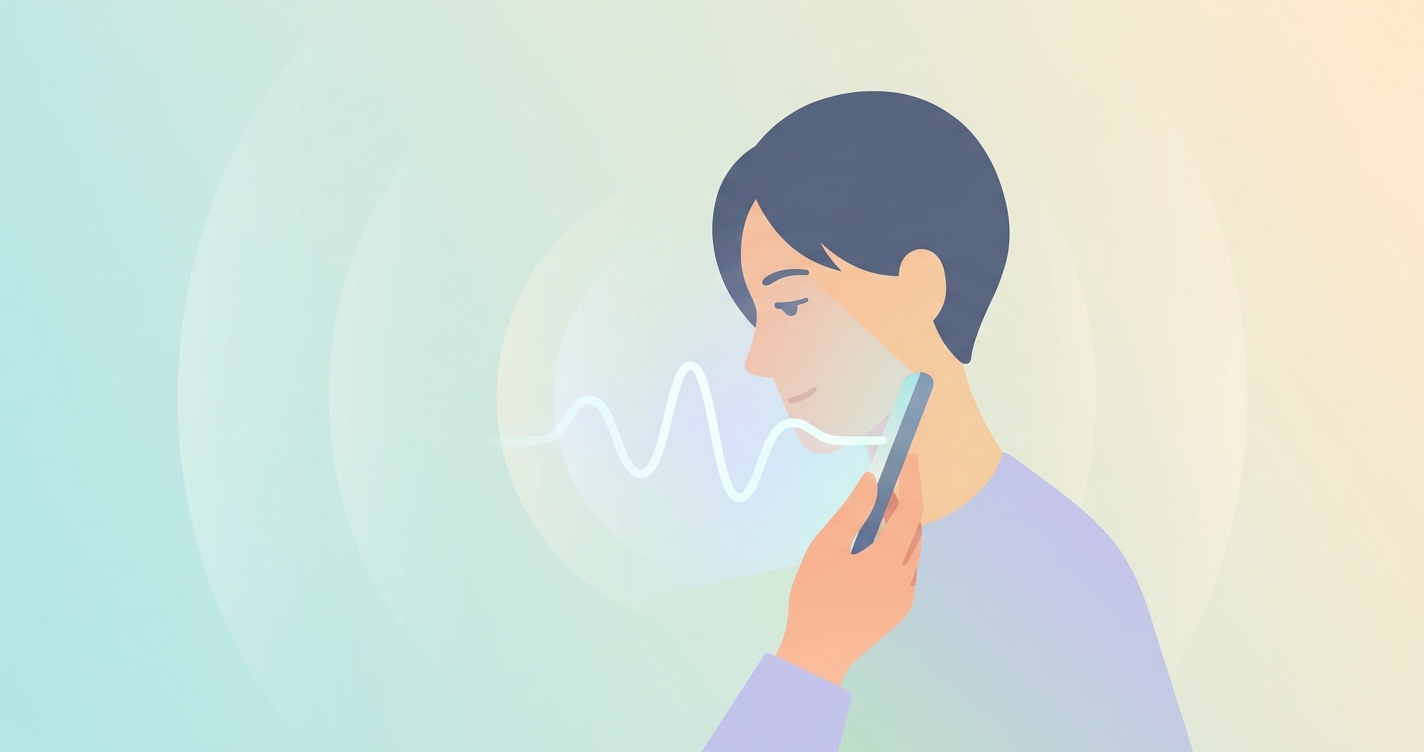
If you have been asked to complete a 30-second health scan as part of a life insurance application, the first thing worth knowing is that there is no single number you "pass" or "fail." A digital scan is one input into a risk model, not a pass-or-fail gate. That said, the way you prepare in the hours before the scan, and the habits you build in the weeks before, genuinely affect what the camera and the model see. Understanding how remote health screening underwriting works is the difference between a reading that reflects a momentary spike and one that reflects your actual baseline. This guide explains what to change today, what to change over a longer horizon, and how carriers interpret the signals on the other side.
In 2023, 79% of all individual life insurance applications were submitted with some form of accelerated underwriting, up from 50% in 2020, and 60% of carriers used at least one digital health data source, according to LIMRA's 2024 study "Accelerated Underwriting: The New Normal."
How remote health screening underwriting reads your scan
Most smartphone scans rely on remote photoplethysmography, or rPPG. The front-facing camera detects tiny color changes in your skin as blood pulses through capillaries in your face. From that signal, models estimate heart rate, heart rate variability, respiration, and in some systems an approximation of blood pressure and physiological age. Contact-based versions ask you to cover the lens with a fingertip and work on the same principle.
The important point for any applicant is that remote health screening underwriting does not treat one elevated reading as a verdict. Underwriting engines combine the scan with prescription history, motor vehicle records, and application answers. A single high heart rate caused by rushing up the stairs before the scan is noise, and well-designed systems are built to detect and discount obvious noise. What you want to avoid is introducing avoidable noise that makes your true baseline harder to read.
Research helps frame the stakes. Google's PHRM system, validated on smartphone front cameras, reported a heart rate error of 6.09% and a resting heart rate mean absolute error of 4.39 beats per minute, and it correlated higher resting heart rates with higher BMI and poorer cardiovascular fitness. The takeaway is that these tools are designed to estimate a stable resting state, so giving them a stable resting state to measure is in your interest.
Here is how short-term preparation differs from the longer-term changes that actually move your underwriting risk class:
| Factor | Same-day prep (affects the reading) | Long-term change (affects true risk) | What underwriting infers |
|---|---|---|---|
| Caffeine and nicotine | Avoid for 2 to 3 hours before | Reduce or quit nicotine entirely | Elevated resting heart rate, vascular stress |
| Physical exertion | Sit calmly 5 minutes before scanning | Build regular aerobic fitness | Resting heart rate and recovery |
| Stress and timing | Scan in a quiet moment, not mid-rush | Manage chronic stress, sleep | Heart rate variability |
| Hydration | Be normally hydrated | Consistent hydration habits | Signal quality, perfusion |
| Lighting and posture | Even, bright light; hold phone steady | n/a | Scan reliability, retry rate |
| Body composition | n/a | Gradual weight management | Estimated metabolic and cardiac load |
What to change today
Same-day adjustments will not transform your health, but they remove distortion so the scan reflects your real condition rather than a temporary state.
- Skip caffeine and nicotine for at least two to three hours beforehand. Both raise resting heart rate and can suppress heart rate variability.
- Sit quietly for five minutes before you start. Avoid scanning right after climbing stairs, carrying groceries, or an argument.
- Scan in even, bright lighting. rPPG depends on the camera detecting subtle color changes, and poor light forces retries or weaker signals.
- Hold the phone steady and keep your face still. Motion artifacts are a leading cause of failed captures.
- Choose a calm time of day. A reading taken during a stressful afternoon will look different from one taken in a settled moment.
- Be normally hydrated. Dehydration affects peripheral blood flow and can reduce signal quality.
None of these tactics game the system. They simply help the system measure you accurately, which is what you want if your underlying health is sound.
What to change over weeks and months
If your application is not urgent, the changes that genuinely shift your risk profile are the unglamorous ones. A scan estimates cardiovascular signals, and those signals respond to sustained behavior, not last-minute effort.
Cardiovascular conditioning
Regular aerobic activity lowers resting heart rate and improves recovery, both of which surface in rPPG-derived metrics. Even modest, consistent walking moves the needle over a few weeks.
Nicotine cessation
Nicotine status is one of the largest single factors in life insurance pricing. Quitting affects both the scan-derived vascular signals and the separate cotinine and prescription checks carriers run.
Sleep and stress
Heart rate variability, a common scan output, is sensitive to chronic stress and poor sleep. Improvements here tend to show up faster than weight changes.
Weight and metabolic health
Gradual weight management influences estimated metabolic and cardiac load. This is the slowest lever, but for many applicants it is the most consequential over a longer horizon.
Industry applications: why pre-screening engagement matters
For underwriting VPs and product managers, applicant preparation is not a footnote. It is a risk-mitigation and data-quality strategy.
Reducing avoidable retries
A meaningful share of failed or low-confidence scans trace back to lighting, motion, and timing rather than health. Brief in-flow guidance lowers retry rates and abandonment, which directly affects placement.
Improving signal-to-noise for the model
Remote photoplethysmography accuracy is known to degrade at elevated heart rates, a limitation documented across recent validation work. Coaching applicants into a resting state before capture improves the quality of the input the model receives.
Encouraging genuine risk improvement
Pre-screening engagement that nudges applicants toward cessation or conditioning is not just goodwill. It can shift the measured risk of the book over time, and it gives carriers a defensible, transparent touchpoint in the customer relationship.
Current research and evidence
The accuracy picture for smartphone scans has matured quickly. The SMARTBEATS study reported 97.7% sensitivity and 99.4% specificity for detecting atrial fibrillation and flutter against ECG in an unsupervised setting. Separate work on the WellFie rPPG application reported heart rate accuracy around 97% and systolic and diastolic blood pressure accuracy near 94% and 93% in normotensive adults. A Frontiers scoping review on contact-based smartphone PPG emphasized that acquisition conditions, including stillness and adequate signal length, materially affect reliability.
The same literature is candid about limits. Accuracy drops sharply at elevated heart rates, and researchers are still optimizing camera exposure across diverse skin tones and improving video stabilization. For applicants this reinforces a simple message: a calm, well-lit, still capture is the condition under which these tools perform best. For carriers, it underscores why pre-capture guidance is part of model performance, not separate from it.
The future of remote health screening underwriting
Expect the applicant-facing experience to get more instructive. As LIMRA's data shows accelerated underwriting becoming standard, carriers will compete on how smoothly applicants complete digital steps rather than whether they offer them. That points toward real-time capture feedback, clearer explanations of what is measured, and optional pre-scan readiness checks. Over the next few years, remote health screening underwriting will likely fold scan signals together with prescription, behavioral, and consented wearable data, with the scan serving as a convenient, repeatable anchor rather than a standalone test. The applicants who benefit most will be those who treat the scan as a mirror of real habits, and the carriers who benefit most will be those who help applicants present an accurate reflection.
Frequently asked questions
Can I fail an insurance health scan? There is no simple pass or fail. The scan is one input among many in remote health screening underwriting. A single reading rarely decides an outcome, and obvious anomalies are typically flagged for review or retry rather than treated as a verdict.
Will one high heart rate reading hurt my application? Usually not on its own. Models are built to account for momentary spikes, and carriers cross-check against other data. Resting calmly before the scan still helps, because it gives the system a cleaner picture of your baseline.
How early should I prepare before scanning? Sit quietly for about five minutes and avoid caffeine, nicotine, and exertion for two to three hours beforehand. Longer-term changes like fitness and nicotine cessation take weeks to register but matter far more to actual risk.
Does lighting really affect the result? Yes. rPPG depends on the camera detecting subtle color changes in your skin, so even, bright lighting and a steady hold reduce failed captures and improve signal quality.
Circadify is building tools in this space, helping carriers replace the nurse visit with a phone-based self-scan while giving applicants clearer guidance on what the assessment measures. Insurance teams exploring product demos and integration guides for remote health screening underwriting can learn more at circadify.com/industries/payers-insurance.