Is it safe to share a video of my face with a life insurance company?
Learn about the data privacy and security measures involved when using facial video for a life insurance health assessment, focusing on insurance applicant health data privacy.
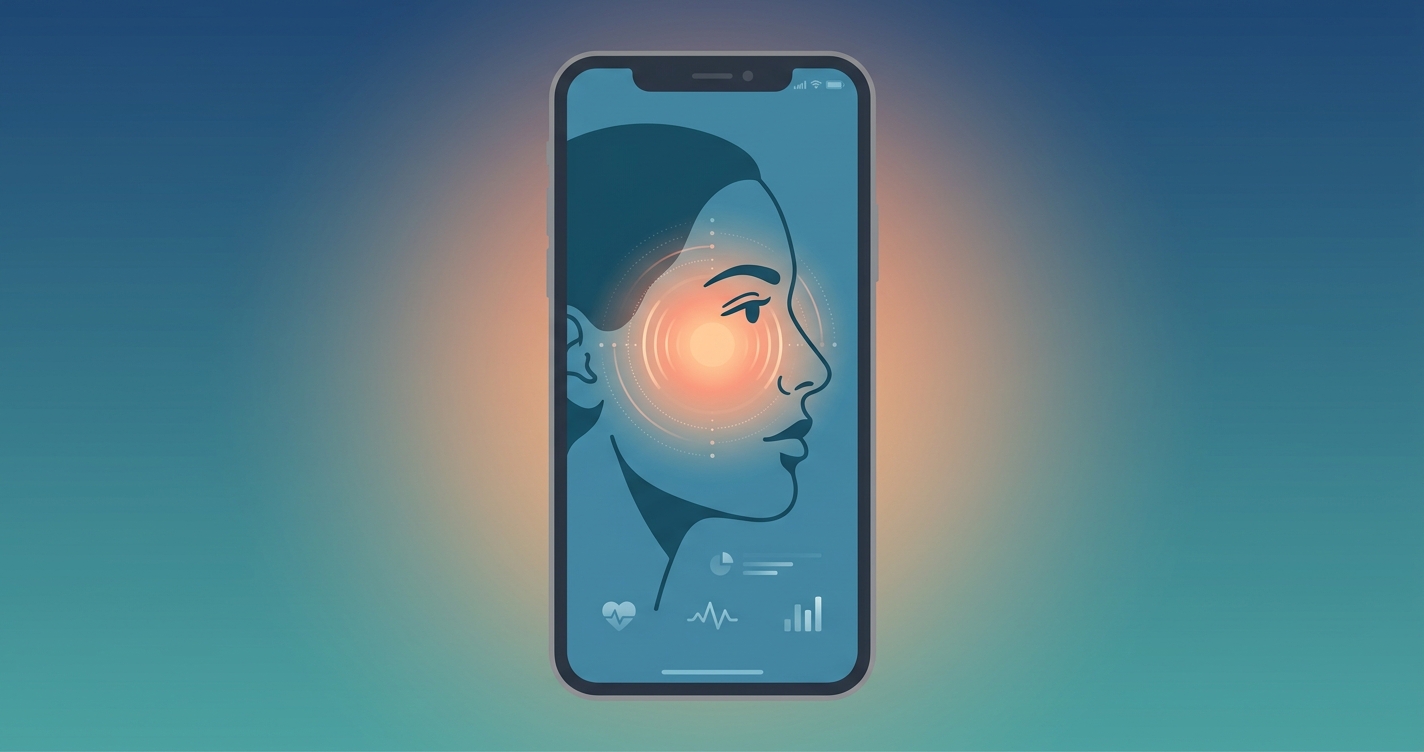
The request to take a short video of your face for a life insurance application can feel unsettling. For decades, the industry relied on in-person exams, blood draws, and urine samples. Now, a 30-second video scan from a smartphone can replace the nurse visit, raising valid questions about what is being measured, where the data goes, and how it is protected. Understanding the specifics of the technology and the regulations that govern its use is key to evaluating the safety of this process. The conversation centers on a critical topic for carriers and applicants alike: insurance applicant health data privacy.
"In 2023, healthcare data breaches affected over 133 million individuals, a 156% increase from the previous year, with hacking and IT incidents being the most common cause." - The HIPAA Journal (2024)
Decoding the data: what a facial video scan actually measures
The primary concern for most applicants is the video itself. It's important to clarify that these systems are not designed for cosmetic analysis or facial recognition in the way law enforcement or social media might use it. Instead, the technology is called remote photoplethysmography (rPPG). It works by analyzing the light that reflects off your skin. As your heart pumps blood, the capillaries in your face fill and empty, causing microscopic changes in skin color. These changes, invisible to the naked eye, can be detected by a smartphone camera.
The rPPG software processes the video feed in real time to translate these color changes into a waveform, which is then used to calculate physiological measurements. The core output is not a stored video of your face, but rather a set of specific health data points required for underwriting, such as:
- Heart Rate: The number of heartbeats per minute.
- Heart Rate Variability (HRV): The variation in time between each heartbeat, which can be an indicator of cardiovascular health and stress levels.
- Blood Pressure: Often provided as a risk assessment or range rather than a precise diastolic/systolic reading.
- Respiratory Rate: The number of breaths taken per minute.
This method shifts the focus of insurance applicant health data privacy from the security of physical samples (blood, urine) to the digital protection of biometric data streams. The video itself is typically transient, meaning it is analyzed and then immediately discarded without being saved by the insurance carrier.
| Feature | Traditional Paramedical Exam | Video-Based Health Assessment (rPPG) |
|---|---|---|
| Data Collected | Blood, urine, height, weight, blood pressure, pulse, medical history | Vital signs (Heart Rate, HRV, Blood Pressure), BMI (if height/weight entered) |
| Data Storage | Physical samples stored in a lab; results digitized into PHI | Derived data points are stored as PHI; video is transient/deleted |
| Applicant Experience | Requires scheduling a 30-60 minute in-person appointment | 30-60 second scan via smartphone app at applicant's convenience |
| Turnaround Time | 5-10 business days for lab results to reach the carrier | Instantaneous results delivered to the underwriting engine |
Industry applications and data governance
For insurance carriers, the appeal of video-based assessments is clear: they reduce cycle times, lower operational costs, and create a less intrusive applicant experience. However, the implementation of this technology is governed by a strict framework of data protection regulations.
Regulatory Oversight
Any health data collected from an applicant by a covered entity is considered Protected Health Information (PHI) under the Health Insurance Portability and Accountability Act (HIPAA). This means the vital signs extracted from the video scan are subject to HIPAA's Privacy and Security Rules. These rules mandate strict technical, physical, and administrative safeguards for how PHI is stored, accessed, and transmitted. Life insurers, while not always considered HIPAA "covered entities" directly, are typically governed by the Gramm-Leach-Bliley Act (GLBA) and various state-level privacy laws like the California Consumer Privacy Act (CCPA), which impose similar data protection obligations.
Data Minimization
A core principle of modern data privacy is minimization - collecting only the data that is strictly necessary. The video scan is a prime example. The system is not capturing a holistic video for subjective review. It is a targeted tool designed to extract a few specific data points. By not storing the facial video, technology providers and carriers reduce their data liability and align with privacy-best-practices.
Security and encryption
The process involves multiple layers of security to ensure insurance applicant health data privacy:
- The video stream is typically encrypted during transmission from the applicant's device to the processing server.
- The server that processes the video is located in a secure, compliant environment.
- The resulting data points (e.g., heart rate) are transmitted to the insurer's underwriting platform via secure, authenticated APIs.
- Access to this data within the insurance company is restricted to authorized personnel involved in the underwriting process.
Current research and evidence
The validity of rPPG technology is a subject of ongoing scientific research. Studies compare its output against "gold standard" medical devices like electrocardiograms (ECG) for heart rate and clinical-grade blood pressure cuffs. Research published in journals such as the European Heart Journal and presented by institutions at conferences has shown high degrees of accuracy for rPPG in controlled settings. For example, a 2021 study led by researcher G. V. A. van der Heijden validated an rPPG algorithm for pulse rate monitoring in cardiovascular disease patients, demonstrating its potential for clinical applications. However, accuracy can be influenced by factors like lighting conditions, skin tone, and motion. As a result, providers of these technologies invest heavily in algorithms that can correct for these variables to ensure reliable outputs.
The future of contactless health assessment
The use of video for health assessment in insurance is still in its early stages but is expanding rapidly. The technology is evolving to potentially measure other biomarkers, such as blood oxygen saturation (SpO2) and even stress levels through advanced HRV analysis. As algorithms improve and become validated for more use cases, applicants can expect to see these contactless options become standard for a wider range of insurance products and face amounts. The focus for carriers will be on integrating these tools in a way that is transparent, secure, and improves the applicant experience without compromising underwriting rigor or data privacy.
Frequently asked questions
1. Does the insurance company keep the video of my face?
- In most implementations, the video is used for real-time analysis and is not permanently stored. The system processes the light information from the video to extract vital signs and then discards the video file.
2. Can this technology be used to identify me or determine my race or age?
- The technology's purpose is to measure physiological signals based on color changes in the skin, not to perform facial recognition. While demographic data like age can influence algorithms, the system is designed to measure health metrics, not identify personal traits for other purposes. Identity verification is a separate and distinct step in the insurance application process.
3. What happens if I move too much or the lighting is bad during the scan?
- The software includes quality checks. If the signal quality is too low due to movement, poor lighting, or an obstructed camera, the application will typically notify the user immediately and ask them to perform the scan again to ensure the data is accurate.
4. How does this compare to data from a smart watch like an Apple Watch or Fitbit?
- Many consumer wearables use a form of contact photoplethysmography (PPG), where a light shines directly against the skin. Video-based rPPG uses ambient light and a camera. While both measure similar things, the validation and intended use are different. Insurance tools are calibrated specifically for risk assessment and must meet the carrier's standards, whereas consumer devices are generally for wellness and fitness tracking.
The insurance industry's adoption of digital tools is aimed at making the application process faster and more convenient. As these technologies become more common, the commitment to robust insurance applicant health data privacy remains a cornerstone of their implementation. At Circadify, we are at the forefront of developing solutions that balance a seamless applicant experience with the enterprise-grade security and compliance that insurance carriers require. To see how this technology integrates into modern underwriting workflows, explore our product demos and integration guides at circadify.com/industries/payers-insurance.