How accurate is a 30-second health scan compared to blood work?
An analysis of how a 30-second health scan using a smartphone camera compares to traditional blood work for insurance underwriting, covering accuracy, use cases, and future trends.
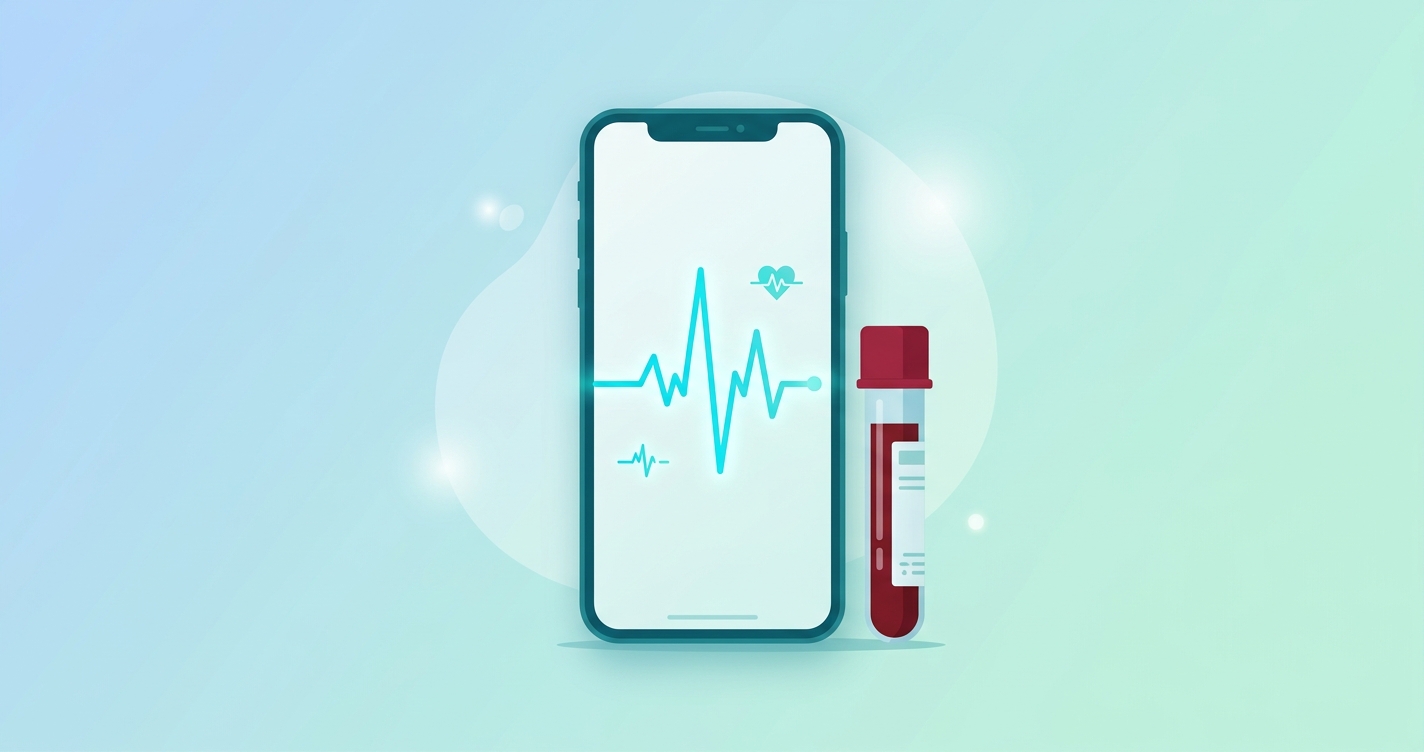
The question of how a 30-second health scan compares to traditional blood work is a critical one for the insurance industry. For decades, underwriting has relied on blood and urine samples to assess risk. This model is proven but slow, expensive, and invasive for the applicant. As technology evolves, carriers are looking for faster, more applicant-friendly alternatives. Digital health assessments, often using a smartphone camera to capture vital signs, are emerging as a leading contender. This analysis examines the accuracy, benefits, and limitations of a 30-second health scan vs. blood work, particularly in the context of insurance underwriting.
"While rPPG can achieve clinical-grade accuracy for heart rate in controlled settings, its accuracy for blood pressure and oxygen saturation is less mature and can be affected by factors like elevated heart rates, lighting, motion, and skin tone." - RGA, 2023
Analyzing the accuracy: 30 second health scan vs blood work
A 30-second health scan, typically using remote photoplethysmography (rPPG) technology, and a traditional blood panel are fundamentally different tools. An rPPG scan uses a device's camera to detect light reflections from blood flow under the skin, measuring vitals like heart rate, respiratory rate, and blood pressure. Blood work, on the other hand, directly analyzes the composition of the blood to measure a wide range of biomarkers, including cholesterol (HDL, LDL), glucose (A1C), liver and kidney function (creatinine), and nicotine.
The core of the "30 second health scan vs blood work" debate isn't about which is "better" in a vacuum, but which is appropriate for the task. For underwriting low-to-medium face value policies, a rapid, non-invasive scan that confirms an applicant's self-reported health data may be sufficient. For high-value policies, a comprehensive blood panel will likely remain the standard.
A 2022 study by Hao et al. published in the Journal of Medical Internet Research found that rPPG-derived measurements could achieve high accuracy for heart rate and SpO2 under ideal conditions. However, they noted that real-world factors like movement and lighting variations can introduce challenges. Blood pressure measurement via rPPG is an area of active research, with companies making significant strides but still facing hurdles in matching the accuracy of a traditional cuff.
| Feature | 30-Second Health Scan (rPPG) | Traditional Blood Work |
|---|---|---|
| Method | Optical (camera-based) | Chemical analysis |
| Measures | Vital signs (HR, RR, BP), SpO2 | Biomarkers (lipids, glucose, etc.) |
| Invasiveness | Non-invasive | Invasive (needle) |
| Turnaround Time | Instant | 2-7 days |
| Applicant Experience | High convenience, low friction | Inconvenient, can be stressful |
| Use Case | Triage, accelerated underwriting | Comprehensive risk assessment |
Industry Applications
The primary application for 30-second health scans in insurance is to accelerate underwriting for certain product lines. This technology offers a way to gather objective health data without the logistical and financial overhead of paramedical exams.
Term and whole life insurance
For standard term and whole life policies, a digital health scan can serve as a powerful triage tool. It allows carriers to quickly identify low-risk applicants who can be approved with minimal further underwriting. This reduces cycle times from weeks to days, or even minutes.
Final expense and burial insurance
These policies are typically low face value and targeted at older applicants. A simple, non-invasive health scan is a much better fit for this market than a full medical exam, improving completion rates and making coverage more accessible.
Mortgage protection insurance
The timeliness of mortgage protection insurance makes digital screening a natural fit. Applicants need coverage quickly after a home purchase. A 30-second scan that can be completed from their own phone removes a major friction point.
Current research and evidence
The scientific community has been actively studying rPPG technology for over a decade. Early research focused on establishing the basic principles, while more recent work has focused on improving accuracy and expanding the range of measurable parameters.
- A study by the University of South Australia (2021) demonstrated the feasibility of measuring vital signs from "selfie" videos.
- Research published in Nature Medicine (2020) by a team at Google showed that smartphone cameras could detect cardiovascular risk factors.
- Ongoing studies are exploring the use of rPPG to estimate blood glucose levels, a development that would significantly close the gap with blood work.
- A key challenge highlighted by multiple studies, including a 2023 review in Frontiers in Bioengineering and Biotechnology, is the technology's sensitivity to motion and skin tone. Researchers are actively developing new algorithms to mitigate these variables and improve performance across diverse populations and real-world conditions.
It's important to note that while research is promising, a 30-second health scan is not a replacement for a comprehensive diagnostic blood test ordered by a doctor. For insurance underwriting, it is a tool for risk stratification, not medical diagnosis.
The future of digital health scans in insurance
The trajectory of digital health assessments points toward broader adoption and enhanced capabilities. As algorithms improve and the technology is validated against larger datasets, the range of applications will expand. We can expect to see more sophisticated risk models built on data from these scans, allowing for more nuanced and accurate underwriting. The "30 second health scan vs blood work" discussion will likely shift from an "either/or" proposition to a "when and how to use each" strategy. The end goal is not to eliminate blood work entirely, but to reserve it for cases where it is truly necessary.
Frequently asked questions
Q: Can a 30-second health scan detect all the same things as blood work? A: No. A health scan measures vital signs and blood flow dynamics. Blood work analyzes the chemical composition of the blood. They are complementary, not interchangeable. A scan can't measure your cholesterol, but it can indicate a high-risk cardiovascular state.
Q: How is the accuracy of a 30-second scan verified? A: Technology providers validate their algorithms against medical-grade devices. For example, heart rate from a scan is compared to an ECG, and blood pressure is compared to a standard cuff. Accuracy is often evaluated using metrics like Mean Absolute Error (MAE) and Bland-Altman plots.
Q: Is a digital health scan secure? A: Reputable providers use secure, HIPAA-compliant platforms. Data is encrypted in transit and at rest, and user privacy is protected. The process is often more secure than traditional methods that involve paper forms and multiple handoffs.
Q: What happens if the scan indicates a problem? A: It depends on the insurer's workflow. Typically, an abnormal result from a digital health scan would route the application to a human underwriter for further review. It might trigger a request for more information, such as an Attending Physician Statement (APS) or, in some cases, a traditional medical exam.
The insurance industry is actively navigating the shift from traditional to digital-first underwriting. While blood work remains the gold standard for comprehensive analysis, 30-second health scans offer a powerful, applicant-friendly tool for a growing number of use cases. As technology and data science continue to advance, Circadify is at the forefront of developing solutions that help carriers use these new capabilities. To see product demos and access integration guides for our digital health assessment platform, please visit circadify.com/industries/payers-insurance.