Insurance Health Screening Accessibility: Reaching Every Applicant
How insurance carriers can make health screening accessible to every applicant, from rural populations to those with disabilities, using digital and contactless methods.
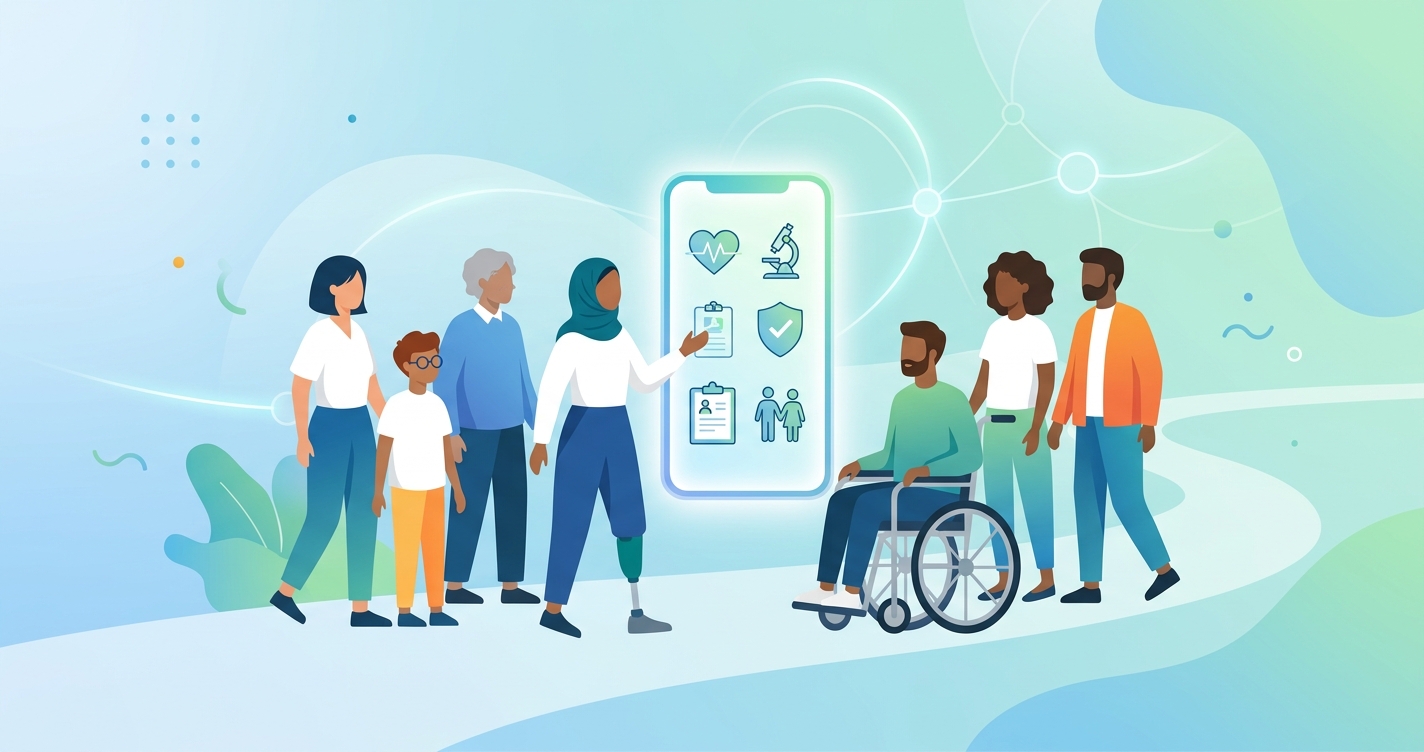
The life insurance industry has a reach problem. According to LIMRA's 2024 Insurance Barometer Study, 102 million Americans are either uninsured or underinsured, and a disproportionate share of that gap falls on populations who face the most barriers to completing traditional health screening: rural residents, elderly applicants, people with disabilities, non-English speakers, and those without reliable transportation. Insurance health screening accessibility isn't a compliance checkbox. It's the operational bottleneck sitting between carriers and the coverage gap they keep talking about closing.
"Middle-income Americans, those with household incomes of $50,000 to $149,999, represent the largest market opportunity for the industry. These households are more likely to say they need life insurance but don't have it." — LIMRA, 2024 Insurance Barometer Study
Why traditional screening leaves millions out
The paramedical exam was designed for a specific kind of applicant: someone who lives near an examiner, can take a weekday appointment, can sit for a blood draw, and speaks the same language as the person drawing their blood. That describes fewer people every year.
The U.S. Census Bureau reports roughly 60 million Americans live in rural areas where paramedical examiner networks are thin or nonexistent. The CDC's 2023 Disability and Health Data System found that 27% of U.S. adults have some form of disability, and 13.7% have a mobility disability specifically. The Census Bureau's American Community Survey shows that over 25 million U.S. residents have limited English proficiency. These populations overlap, and each runs into different walls with traditional screening.
The outcome isn't surprising: applicants who can't easily complete a paramedical exam either abandon the application or never start one. LIMRA's data shows that 48% of consumers cite the exam requirement as a reason for not purchasing life insurance. For applicants with accessibility barriers, that number is almost certainly higher, though granular data remains sparse because most carriers don't track abandonment by accessibility category.
Barriers by population
These barriers are specific and structural. Better marketing won't fix them. Simpler application forms won't fix them. The screening process itself has to change.
| Population | Primary barrier | Secondary barrier | Traditional screening impact |
|---|---|---|---|
| Rural residents (60M Americans) | Geographic distance from examiners | Limited broadband for telehealth alternatives | Longer scheduling delays, higher no-show rates |
| Elderly applicants (65+, 56M) | Mobility limitations, transportation dependency | Cognitive accessibility of digital interfaces | Higher exam cancellation rates, caregiver coordination required |
| People with mobility disabilities (13.7% of adults) | Physical exam requirements (seated blood draw, height/weight) | Inaccessible screening facilities | Some applicants physically unable to complete standard exam |
| Non-English speakers (25M+ LEP residents) | Language barriers with examiners and forms | Cultural differences in health screening norms | Miscommunication, incomplete health histories |
| Shift workers and gig economy | Scheduling inflexibility for weekday exam appointments | No employer-sponsored screening infrastructure | Application abandonment due to scheduling conflicts |
| Immunocompromised individuals | Infection risk from in-person exam settings | Anxiety about specimen collection in shared facilities | Voluntary deferral of screening, coverage gap persists |
These barriers compound. A rural elderly applicant who doesn't speak English fluently faces three simultaneous obstacles, and the traditional model accommodates none of them.
How digital screening changes things
Digital health screening doesn't automatically solve accessibility. A poorly designed digital experience creates its own exclusion patterns, as the HHS's 2024 Section 504 update makes clear. But when accessibility is a design constraint from the start, digital screening can reach populations that the paramedical model structurally cannot.
The shift is from examiner-dependent to self-service. Instead of requiring an applicant to be physically present with a trained examiner, digital screening lets the applicant complete a biometric capture on their own smartphone, in their own environment, on their own schedule. Remote photoplethysmography (rPPG) technology captures cardiovascular metrics through the phone's front-facing camera, which means no blood draw, no specimen collection, and no physical contact.
The accessibility implications are concrete. A wheelchair user doesn't need to navigate an exam facility designed for ambulatory patients. A night-shift worker can complete their screening at 2am. A rural applicant in a county with zero paramedical examiners can screen from their kitchen. A non-English speaker can use an interface localized to their language rather than relying on an examiner who may or may not speak it.
The HHS finalized new digital accessibility standards under Section 504 in May 2024, requiring WCAG 2.1 AA compliance for all patient-facing health technology by 2026. Insurance carriers adopting digital screening should treat this as a floor, not a ceiling. The WHO estimates that 1.3 billion people globally live with some form of disability, and accessible design benefits a far larger user base than the disability community alone.
What accessible screening actually requires
Accessible screening demands specific technical and design decisions. The following table maps WCAG 2.1 AA requirements to insurance health screening functionality.
| WCAG requirement | Application to health screening | Implementation example |
|---|---|---|
| Perceivable (1.1 — text alternatives) | All screening instructions, results, and UI elements must have text alternatives | Alt text for biometric capture guides, screen reader compatibility for results |
| Operable (2.1 — keyboard accessible) | Full screening flow must be completable without mouse or touch | Keyboard navigation through consent, capture, and questionnaire steps |
| Understandable (3.1 — readable) | Health screening language must be readable at appropriate literacy level | Plain-language instructions, reading level targeting 6th-8th grade |
| Robust (4.1 — compatible) | Screening must work with assistive technologies | Tested with VoiceOver, TalkBack, JAWS, and screen magnifiers |
| Time adjustable (2.2.1) | Biometric capture timeouts must be extendable | Applicants with motor disabilities get extended capture windows |
| Language of page (3.1.1) | Screening must identify its language for screen readers | Proper lang attributes, multi-language support |
Beyond WCAG compliance, insurance-specific accessibility considerations include readability of health questionnaires, cultural sensitivity of biometric instructions (some populations have different norms around facial imaging), and fallback pathways for applicants whose specific disabilities prevent completion of any digital interface.
What carriers are doing now
The industry response has been uneven. Some carriers have built digital-first screening with accessibility baked in. Others have bolted digital options onto workflows that are still fundamentally inaccessible.
Munich Re's 2024 survey found that 82% of life insurers operate some form of accelerated underwriting track, but the survey didn't ask about accessibility accommodations within those tracks. The gap between "we offer digital screening" and "our digital screening is accessible" remains substantial.
A few patterns are showing up among carriers who take this seriously:
Multi-modal screening pathways give applicants options rather than forcing a single channel. If an applicant cannot complete a smartphone-based biometric capture due to a visual impairment, an alternative pathway using voice-guided instructions or telephonic data collection is available. The goal is that no single disability category results in an inability to complete screening.
Language localization goes beyond translating the interface. Carriers working with Hispanic and Asian-American populations, two of the most underinsured demographics according to LIMRA, are adapting not just language but cultural context. Health screening instructions that reference a "selfie" make sense in some cultural contexts and not others.
Carrier-subsidized device programs address the assumption that every applicant owns a recent-model smartphone. Some group insurance programs are piloting shared-device models where employer sites or community locations provide pre-configured tablets for screening, similar to how voting precincts provide accessible voting machines.
The rural access problem
Rural access deserves its own section because it's the most straightforward win for digital screening. The traditional model requires examiner travel to rural locations, which increases cost and scheduling latency. The National Association of Insurance Commissioners (NAIC) has flagged rural insurance access as a regulatory priority, and several state insurance departments have issued guidance encouraging digital alternatives to in-person exams for rural applicants.
The FCC's 2024 Broadband Data Collection shows that 94.4% of rural Americans now have access to broadband at 25/3 Mbps, which is more than sufficient for a smartphone-based health screening that transmits a short video capture. The remaining 5.6% without broadband can still complete a rPPG-based screening over cellular data, since the data payload for a 30-second facial video capture is modest.
This is not hypothetical. Carriers operating in predominantly rural states like Montana, Wyoming, and the Dakotas report that digital screening has reduced their average scheduling-to-completion time from 14 days to under 1 day for rural applicants, according to industry conference presentations at InsureTech Connect 2025.
Current research and evidence
Academic research on insurance screening accessibility is limited, but adjacent work supports the argument.
Dr. Denise Anthony at the University of Michigan School of Information has published extensively on digital health equity and the ways technology can either reduce or amplify health access disparities. Her work emphasizes that the design choices made during technology development, not just deployment, determine equity outcomes.
The WHO's 2024 Global Report on Health Equity for Persons with Disabilities found that people with disabilities face out-of-pocket health costs 1.2 to 1.5 times higher than non-disabled populations, partly due to the additional logistical burden of accessing health services. Insurance screening that requires in-person attendance contributes to this burden.
Research from Dr. Arjun Venkatesh at Yale School of Medicine on emergency department digital check-in systems found that accessible digital interfaces increased completion rates among elderly patients by 34% compared to paper-based processes. While this research focused on clinical settings rather than insurance, the implication for screening workflow design is direct.
The LIMRA and Life Happens 2024 study also found that Gen Z and Hispanic adults are the least likely to own life insurance, and both demographics are heavy smartphone users. Digital screening that meets these populations where they already are, on their phones, removes a friction point that the traditional model creates.
Where this is heading
Two regulatory trends will shape what comes next.
First, the HHS Section 504 update creates a compliance deadline of May 2026 for WCAG 2.1 AA conformance in federally funded health programs. While not all insurance health screening falls under this rule, carriers who participate in Medicaid, Medicare Advantage, or ACA marketplace plans will need compliant screening tools. The practical effect is that WCAG 2.1 AA becomes the baseline standard for the industry, because building separate accessible and non-accessible screening tools is more expensive than building one accessible tool.
Second, the NAIC's Innovation and Technology Task Force has been examining how state insurance regulations can encourage accessible digital screening without weakening underwriting standards. Several states, including California, New York, and Texas, have issued sandbox or pilot approvals for digital-only underwriting pathways, and accessibility requirements are increasingly attached to those approvals.
Contactless vitals technology, particularly rPPG, fits naturally into this trajectory. A screening method that requires nothing more than a smartphone camera and adequate lighting has an inherently lower accessibility barrier than one requiring specialized equipment, trained personnel, or physical facility access. Companies like Circadify are developing rPPG-based screening specifically for insurance use cases, with accessibility as a core design requirement rather than a retrofit. More information is available at circadify.com/industries/payers-insurance.
Frequently asked questions
What does insurance health screening accessibility mean?
It means designing health screening processes so that every applicant can complete them regardless of physical disability, geographic location, language proficiency, or scheduling constraints. This includes both the technical accessibility of digital interfaces (WCAG compliance, screen reader support) and the operational accessibility of the screening modality itself (not requiring in-person presence, physical specimens, or specialized facilities).
Are insurance carriers required to make health screening accessible?
Federal disability law, including the ADA and Section 504 of the Rehabilitation Act, requires that health programs be accessible to people with disabilities. The HHS's 2024 update to Section 504 explicitly extends this to digital health tools, with a compliance deadline of May 2026. State insurance regulations vary, but the trend is toward requiring accessible alternatives to traditional screening.
How does contactless health screening improve accessibility?
Contactless screening using rPPG technology captures vital signs through a smartphone camera without physical contact, specimen collection, or specialized equipment. This removes barriers for applicants with mobility disabilities, rural residents far from exam facilities, shift workers who can't schedule weekday appointments, and immunocompromised individuals who want to avoid in-person clinical settings.
What is WCAG 2.1 AA and why does it matter for insurance?
WCAG 2.1 AA is the Web Content Accessibility Guidelines standard that specifies how digital content should be built to be perceivable, operable, understandable, and robust for users with disabilities. The HHS now requires this standard for federally funded health technology. Insurance carriers using digital screening tools should ensure WCAG 2.1 AA compliance to meet regulatory requirements and reach the widest possible applicant population.
Related reading: How Phone-Based Health Screening Works for Insurance Applicants | Mobile Health Assessments for Rural and Remote Insurance Applicants