How do I get life insurance from home if I'm worried about privacy?
How a digital health assessment insurance process protects applicant data at home, plus what privacy controls underwriting teams should demand from vendors.
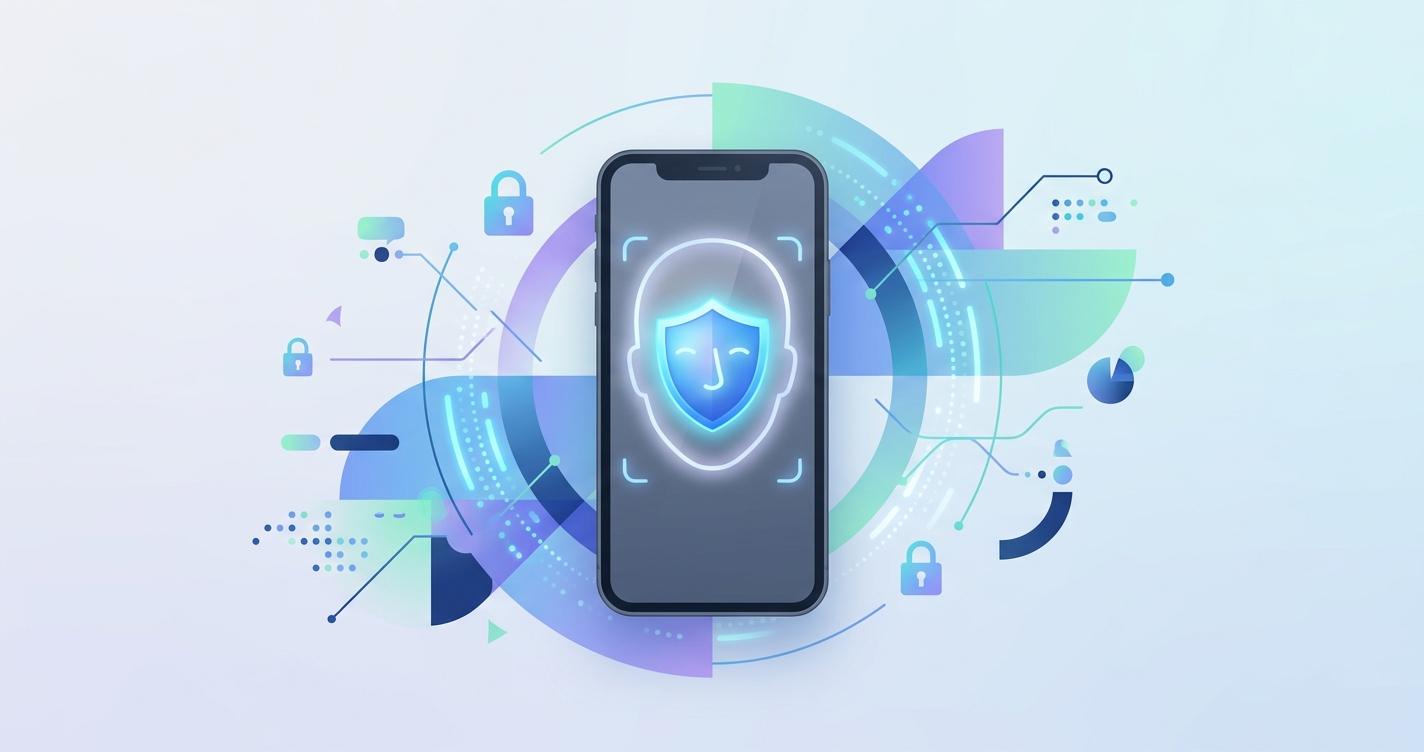
You can buy life insurance from home today without ever booking a nurse visit, and the privacy worry that comes with that is rational, not paranoid. When an applicant completes a digital health assessment insurance flow, they are handing over face video, vital signs, and answers to medical questions through an app rather than to a person at their kitchen table. The reasonable question is not whether this is convenient. It is whether the data is handled with the same seriousness a paramedical exam was supposed to provide. For applicants this is a matter of trust. For the insurance product managers and underwriting leaders building these flows, it is a question of regulatory exposure, vendor diligence, and whether privacy design becomes a conversion lever or a quiet source of abandonment.
A 2024 URAC consumer study found that 72% of Americans now use health-related apps, yet 53% say they would not trust technology companies with their personal health data and 49% fear that data could be misused.
What a digital health assessment insurance process actually collects
The phrase covers a narrow set of data, and understanding the scope is the first step to evaluating the risk. A modern remote health screening for underwriting typically captures a short face video, derived physiological signals such as estimated heart rate from that video, self-reported answers to health questions, and device or session metadata used to confirm the scan was genuine. It does not require a blood draw, a urine sample, or a stranger entering the home. The signals are processed and converted into underwriting-relevant indicators, and the raw inputs are governed by a retention policy rather than kept indefinitely by default.
This matters because consumers consistently misunderstand who is protected and how. The same URAC research found that 81% of Americans incorrectly assume HIPAA covers all health data collected by any app. It does not. The protections that apply to an insurance digital health assessment come from a specific stack of obligations: HIPAA where a covered entity or business associate relationship exists, the Gramm-Leach-Bliley Act for financial information held by insurers, and a fast-growing set of state biometric laws.
The table below contrasts a traditional paramedical exam with a digital assessment across the privacy dimensions that applicants and underwriters care about most.
| Privacy dimension | Traditional paramedical exam | Digital health assessment insurance |
|---|---|---|
| Data collected | Blood, urine, vitals, full medical history | Face video, derived vitals, health answers |
| Who handles raw data | Examiner, courier, lab, third-party admin | Applicant device, encrypted vendor pipeline |
| Physical exposure | Stranger in the applicant's home | No in-person contact |
| Encryption in transit and at rest | Often paper or legacy systems | Standard for HIPAA-aligned vendors |
| Retention transparency | Frequently opaque to applicant | Definable, disclosable retention window |
| Applicant control | Limited after sample is taken | Consent-gated, often retry or delete options |
| Breach notification path | Multiple handoff points | Single accountable processor |
The traditional process was never as private as memory suggests. A blood sample passed through an examiner, a courier, a laboratory, and a data administrator, each a separate point of exposure with limited visibility for the applicant. A well-designed digital flow reduces the number of handoffs and makes the data path auditable.
Security measures that should be non-negotiable
For an applicant deciding whether to trust the process, and for an underwriting VP deciding whether to approve a vendor, the same controls apply. The following should be present and documented:
- Encryption of data both in transit and at rest, which the 2024 HIPAA Security Rule updates moved from a recommendation toward a near-mandatory baseline for electronic protected health information.
- Explicit, granular consent that tells the applicant what is collected, why, and for how long it is kept.
- Defined data retention and deletion schedules rather than indefinite storage.
- Data minimization, meaning the system derives only the indicators underwriting needs and avoids hoarding raw biometric inputs.
- Clear separation between underwriting use and any secondary use, with no sale of health data to third parties.
- Breach notification readiness, including the GLBA Safeguards Rule requirement effective May 13, 2024 that financial institutions notify the FTC within 30 days of a breach affecting 500 or more consumers.
- Independent security attestation such as SOC 2 or equivalent third-party review.
The single most reassuring sentence an applicant can read is that their health data will not be sold. The single most important question an underwriter can ask a vendor is where the raw biometric data goes and when it is destroyed.
Industry applications and what is driving adoption
For applicants worried about a stranger in the home
The privacy benefit that gets overlooked is physical. The remote model removes the in-person visit entirely, which for many applicants, particularly those in rural areas or with safety concerns, is itself a privacy gain. The data exchange is digital, consent-gated, and traceable rather than dependent on an examiner remembering to lock a sample case.
For product managers managing conversion
Privacy friction is conversion friction. A 2024 study cited by Forrester found that only 25% of non-customers and 54% of customers describe health insurers as trustworthy, and two in five consumers reported problems with an insurer's website or app in the past year. A digital assessment that explains its data handling in plain language during the flow, rather than burying it in a policy document, directly addresses the hesitation that causes drop-off.
For underwriting VPs managing risk
The compliance surface is the real story here. Fourteen additional states have passed biometric data legislation taking effect between July 1, 2024 and January 1, 2026, according to tracking by Husch Blackwell. Face-based screening can fall under biometric definitions depending on the state, which means vendor selection is now a multi-state regulatory decision, not just a technology decision. Underwriting leaders who treat privacy architecture as a first-class procurement criterion reduce both legal exposure and reputational risk.
Current research and evidence
The evidence points to a trust gap that secure design can close. URAC's 2024 work shows high adoption alongside deep unease, and the worry is intensifying around automated processing. Verve reported in 2025 that nearly two-thirds of consumers were more concerned about how their data trains AI models than they were two years earlier. That concern is relevant to any assessment that uses machine learning to derive health signals, and it argues for transparency about what models do and do not do with applicant inputs.
There is also a business case forming. Industry reporting in 2024 found that 70% of health insurance executives believe robust cybersecurity has increased member trust in digital services, even as 91% worry about the cost of those measures. The takeaway for carriers is that privacy investment is increasingly read by consumers as a quality signal rather than a back-office expense. Studies on digital versus in-person screening accuracy continue to mature, but the privacy and compliance literature is already clear that documented data governance is a precondition for adoption, not an afterthought.
The future of privacy in remote underwriting
Three shifts are likely over the next few years. First, on-device processing will expand, so that more of the sensitive computation happens on the applicant's phone and less raw data ever leaves it. Second, consent will become dynamic, letting applicants see and revoke specific data uses rather than accepting a single static agreement. Third, regulation will keep tightening as state biometric laws proliferate and federal rules sharpen, which will reward vendors who built strong defaults early and penalize those treating privacy as a checkbox. The carriers that win applicant trust will be the ones that make their data practices legible at the moment of the scan.
Frequently asked questions
Is my data safe if I do a life insurance health scan from my phone? A reputable digital health assessment encrypts data in transit and at rest, limits what it collects to underwriting-relevant signals, and follows a defined retention schedule. Ask the carrier whether the data is sold, how long it is kept, and whether the vendor holds independent security attestation such as SOC 2.
Does HIPAA protect the health data I share with an insurer's app? Not always, and this is widely misunderstood. HIPAA applies where a covered entity or business associate relationship exists. Insurers also fall under the Gramm-Leach-Bliley Act, and face-based scans may trigger state biometric laws. Read the specific consent disclosure rather than assuming HIPAA covers everything.
Can I have my scan data deleted after I apply? Many digital assessment flows support deletion or retry, and well-designed systems publish a retention window. Confirm the deletion policy before you submit, since rights vary by state and by carrier.
Why is a digital scan considered more private than a nurse visit? A traditional exam passes physical samples through an examiner, courier, lab, and administrator, each a separate exposure point. A digital flow removes the in-home visit, reduces handoffs, and creates an auditable, encrypted data path with clearer applicant consent.
Circadify is building digital health assessment technology for the payer and insurance market with privacy and data governance treated as core architecture rather than a compliance afterthought. Carriers and insurtechs evaluating secure remote screening can review product demos and integration guides at circadify.com/industries/payers-insurance.