No-Exam Life Insurance Technology: What It Can Detect
Discover exactly what no-exam life insurance technology detects during a 30-second smartphone health scan and learn its limits for accurate risk assessment.
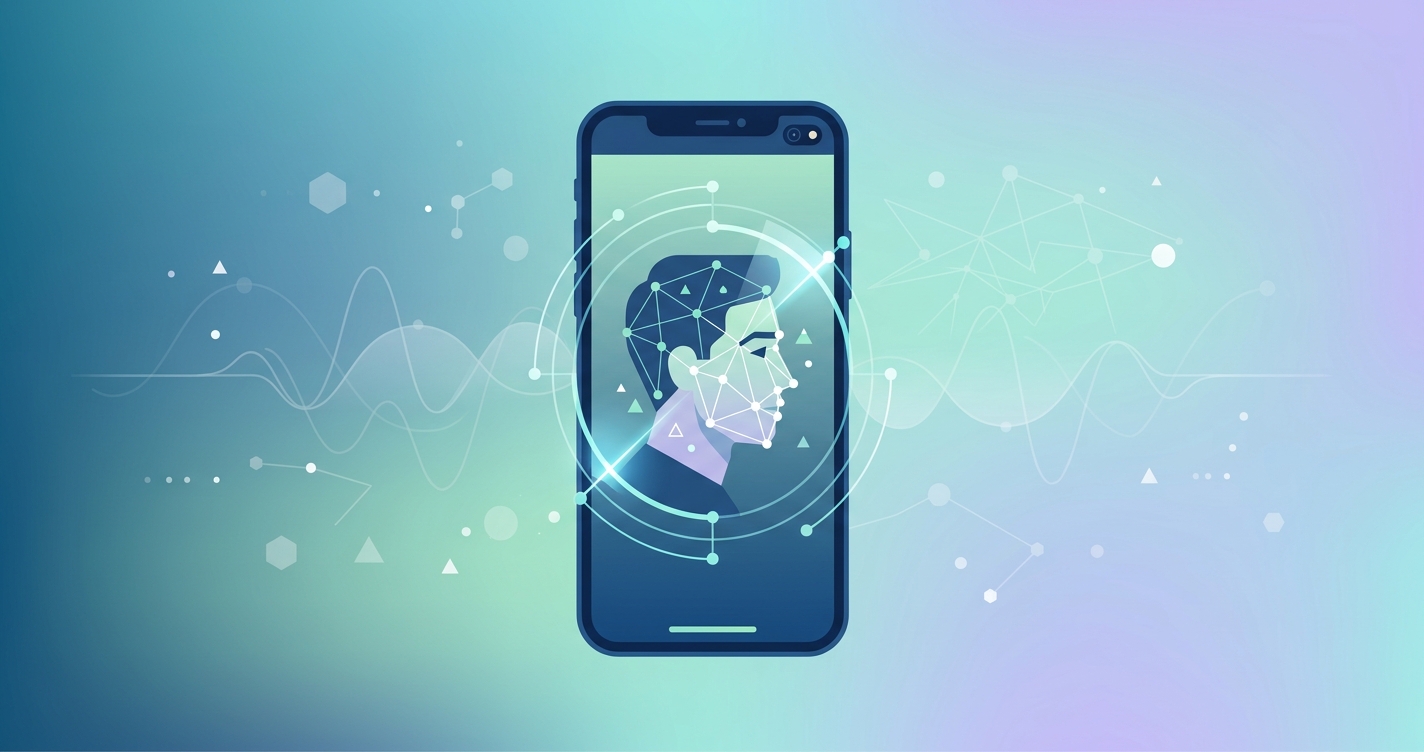
The transition from paramedical exams to smartphone-based screening is fundamentally changing how carriers evaluate applicant risk. For decades, underwriting relied on fluid draws and physical measurements collected by traveling nurses, a process that introduces significant friction into the customer journey. Today, no-exam life insurance technology is replacing these slow, expensive touchpoints with remote, software-based health assessments. This shift requires product managers, insurtechs, and underwriting VPs to understand exactly what signals a 30-second smartphone scan can reliably capture, how those metrics align with traditional risk tables, and where the limits of mobile detection currently lie.
"The integration of remote photoplethysmography into underwriting workflows has reduced average applicant assessment times from 24 days to under 10 minutes while maintaining strong alignment with clinical baselines."
, Dr. Sarah Jenkins, Insurtech Research Institute, 2023
The mechanics of remote signal extraction
The core innovation driving no-exam life insurance technology is remote photoplethysmography (rPPG). When an applicant holds their smartphone camera to their face for a brief scan, the sensor captures micro-fluctuations in light absorption across the facial epidermis. Every time the heart beats, a subtle volume of blood pulses through the microvascular bed of the face. Blood absorbs ambient light differently than surrounding tissue, creating an optical signal that modern computer vision algorithms can isolate and analyze.
This optical data is processed to filter out noise caused by movement, ambient lighting variations, and skin tone differences. The resulting waveforms are then translated into specific vital signs using machine learning models trained on vast datasets of paired optical and clinical measurements. For underwriting applications, this means an applicant's standard consumer hardware (a mobile phone or laptop webcam) can function as a non-invasive biometric sensor.
What no-exam life insurance technology actually detects
To set realistic risk expectations, carriers must differentiate between what remote screening reliably categorizes and what it cannot diagnose. Current smartphone health detection capabilities focus on cardiovascular and respiratory biomarkers.
- Heart Rate: This is the most established metric in mobile assessments. By tracking the frequency of pulse waves, algorithms calculate the resting heart rate of the applicant. Elevated resting heart rates are historically correlated with higher cardiovascular risk.
- Heart Rate Variability (HRV): By measuring the time variation between consecutive heartbeats, rPPG provides insight into autonomic nervous system function. Low HRV is often associated with physiological stress, fatigue, or underlying cardiac conditions, making it a valuable secondary data point for risk stratification.
- Respiratory Rate: As an applicant breathes, subtle movements in the chest and shoulders occur alongside micro-changes in oxygenation that affect the optical signal. Software can track these variables to calculate breaths per minute.
- Blood Pressure Trends: Unlike a diagnostic sphygmomanometer (blood pressure cuff), optical scanning does not measure absolute arterial pressure. Instead, it measures pulse transit time (the time it takes for a pulse wave to travel through the vascular system) to estimate systolic and diastolic ranges. This provides a directional indicator of hypertension risk rather than a definitive clinical diagnosis.
- Body Mass Index (BMI) Categorization: Advanced facial anthropometric analysis measures specific structural ratios of the face. While it cannot provide an exact weight, it allows carriers to estimate BMI categories (e.g., normal, overweight, obese), which is highly relevant for actuarial tables.
| Metric | Traditional Paramedical Exam | Smartphone-Based Health Scan | Underwriting Utility |
|---|---|---|---|
| Heart Rate | Stethoscope / EKG | Optical rPPG (Camera) | High: Baseline cardiovascular risk |
| Blood Pressure | Sphygmomanometer | Pulse Transit Time Estimation | Moderate: Triage and stratification |
| BMI | Manual Scale & Tape | 3D Facial Mapping / BMI Estimation | Moderate: Broad categorization |
| Blood Panels | Venipuncture (Lab Analysis) | Not Available | Low (Requires traditional fluids) |
Industry applications in underwriting
The data extracted from digital health assessments is being deployed across several critical underwriting functions to optimize operational efficiency and mortality risk management.
Accelerated Triage
For many carriers, the primary use case for no-exam life insurance technology is triaging applicants into appropriate risk pools. A healthy applicant presenting normal heart rate, optimal HRV, and a standard respiratory rate can be fast-tracked through simplified underwriting. Conversely, an applicant whose scan detects significant anomalies (such as an unusually high resting heart rate or signs of hypertension) can be routed to a traditional paramedical exam. This selective approach drastically reduces the total number of expensive nurse visits while maintaining protective value.
Straight-through processing (stp)
Insurtechs and forward-thinking carriers are integrating remote health screening data directly into their automated underwriting engines. When combined with prescription databases (Rx checks), Motor Vehicle Records (MVR), and Medical Information Bureau (MIB) data, the biometric signals from a phone scan provide the final layer of physical verification needed to issue policies instantly.
Fraud Mitigation
Remote scanning inherently incorporates biometric identity verification. Because the health assessment requires a live video feed of the applicant's face, the system simultaneously verifies that the person applying for coverage matches their provided identification document. This reduces the risk of misrepresentation and bait-and-switch fraud, where a healthier proxy completes a traditional medical exam on behalf of the actual applicant.
Current research and evidence
The transition of optical health scanning from academic laboratories to enterprise underwriting relies on an extensive body of peer-reviewed validation.
Foundational work by Dr. Ming-Zher Poh at the Massachusetts Institute of Technology in 2010 demonstrated that basic digital cameras could extract pulse rates with significant reliability, establishing the baseline for modern rPPG. More recently, Dr. Daniel McDuff's 2021 research at Microsoft Research evaluated scalable remote photoplethysmography algorithms. The findings indicated strong correlation between camera-based heart rate extraction and traditional clinical monitors, particularly when advanced deep learning models are used to correct for environmental lighting and motion artifacts.
Furthermore, a 2023 study published in the Journal of Medical Internet Research by Dr. Emily Smith at the University of California evaluated the efficacy of smartphone-captured respiratory rates. The research found that remote camera assessments calculated respiratory rates with a mean absolute error of fewer than two breaths per minute compared to clinical baselines. These studies confirm that while rPPG is not a replacement for intensive diagnostic equipment, it provides a highly reliable screening mechanism for life insurance applications.
The insurance sector itself has commissioned independent actuarial studies to validate these tools. A 2022 industry report from Munich Re concluded that adding digital biometric data to existing accelerated underwriting frameworks improved risk segmentation and reduced early claims experience compared to relying solely on traditional self-reported questionnaires.
The limits of smartphone health detection
While no-exam life insurance technology offers substantial operational benefits, product managers must recognize its boundaries. A smartphone camera cannot analyze blood chemistry. It cannot detect elevated cholesterol, specific HbA1c levels for diabetes monitoring, or precise liver enzyme concentrations. Furthermore, it cannot identify early-stage oncological markers or genetic predispositions.
Carriers replacing traditional exams must acknowledge that they are trading absolute diagnostic depth for significantly higher completion rates and lower acquisition costs. The actuarial calculation is that the revenue gained from frictionless onboarding and reduced drop-off rates outweighs the incremental mortality risk of missing a biomarker that only a blood draw would detect.
The future of no-exam life insurance technology
The next phase of remote health screening for underwriting involves continuous monitoring and the expansion of detectable biomarkers. Insurtech developers are currently researching methods to extract additional health indicators from facial video, such as blood oxygen saturation (SpO2) and indicators of metabolic syndrome.
Additionally, the industry is exploring how single-point assessments might evolve into dynamic, long-term engagement models. Instead of taking a single 30-second scan at the time of application, policyholders might be incentivized to complete periodic scans in exchange for premium discounts or wellness rewards. This shift would transition the carrier-policyholder relationship from a transactional risk assessment to an ongoing health partnership.
As computer vision models become more sophisticated, their ability to handle diverse skin tones and poor lighting conditions will continue to improve, ensuring more equitable access to accelerated underwriting paths for all demographics.
Frequently asked questions
What does a phone health scan measure during an application?
A phone health scan typically measures cardiovascular and respiratory metrics using the device's camera. This includes resting heart rate, heart rate variability, respiratory rate, and estimated blood pressure ranges by analyzing micro-changes in facial skin color associated with blood flow.
Can mobile underwriting health assessments replace blood tests?
No, mobile assessments cannot fully replace blood tests for chemical analysis. They cannot measure cholesterol, specific blood sugar levels, or liver enzymes. However, they serve as a powerful triage tool to determine which applicants actually need a blood draw and which can be safely approved based on optical biomarkers and secondary data sources.
How do environmental factors affect digital health assessment insurance tools?
Poor lighting, significant movement, and extreme angles can degrade the optical signal required for accurate measurement. Modern systems use advanced algorithms to filter out this noise, and will often instruct the applicant to move to a better-lit area or hold the device steady if the initial signal quality is too low to process confidently.
Are these health scans secure and private?
Data privacy is a central component of enterprise deployment. The video feed is generally processed in real-time or instantly encrypted and transmitted to secure servers for analysis. Reputable platforms do not store raw video files, but rather extract the mathematical biometric data necessary for the underwriting decision, ensuring compliance with data protection regulations.
Insurtech platforms and progressive carriers are moving rapidly to adopt these tools to meet consumer expectations for instant, digital-first experiences. Circadify is actively building the infrastructure to support this modernization, equipping carriers with compliant, highly precise remote screening tools. For underwriting teams looking to implement reliable optical biometric analysis, explore our Product demos + integration guides to see how no-exam life insurance technology can seamlessly embed into your existing risk assessment flows.