Can a 30-second phone scan really replace the nurse coming to my house?
A look at how a 30-second phone scan provides vital health data for insurance underwriting, comparing its scope and accuracy to a traditional paramedical exam.
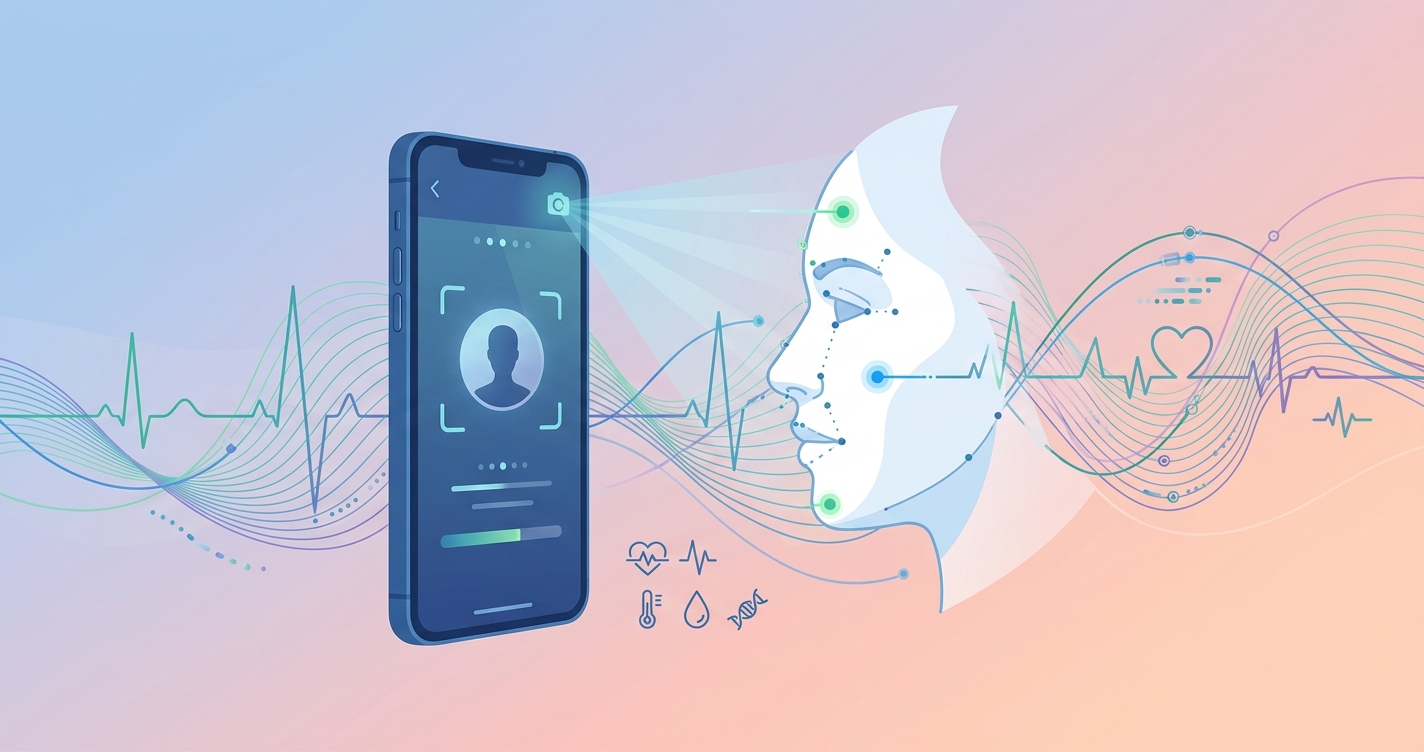
For generations of insurance applicants, the health screening process has been a familiar, if inconvenient, ritual: scheduling a visit, welcoming a nurse into your home, and submitting to an exam that can take the better part of an hour. Now, many carriers are replacing that with a 30-second video scan on a smartphone. For many, this leap in technology feels too good to be true. The central question is whether a quick selfie video can genuinely stand in for a trained medical professional. The answer lies in understanding what this new generation of phone health check insurance technology measures and how it fits into the modern underwriting workflow.
"The use of remote patient monitoring services and tools is expected to reach more than 30 million U.S. patients by 2024, signaling a massive shift in how health data is collected and utilized."
From paramedical exam to phone health check for insurance
The traditional paramedical exam is a mix of measurement and logistics. It involves not just capturing vitals but also drawing blood, collecting urine samples, and asking lifestyle questions. The shift to a phone health check insurance model is not about replacing every single one of these functions. Instead, it's about unbundling them to create a faster, more efficient, and less invasive process for the majority of applicants. The core of this shift is a technology called remote photoplethysmography (rPPG). In simple terms, this technique allows a smartphone camera to measure subtle changes in the light reflected from the skin on a person's face. These changes correspond to the pulsing of blood through the vessels, allowing sophisticated algorithms to extract a wealth of physiological data without any physical contact. For underwriters, this provides immediate access to objective biometric data, significantly reducing the time and cost associated with manual, in-person collection methods.
| Feature | Traditional Paramedical Exam | Smartphone-Based Health Check |
|---|---|---|
| Time Commitment | 30-60 minutes, plus scheduling | 30-60 seconds, on demand |
| Data Collection Method | Manual (sphygmomanometer, pulse oximeter), fluid samples | Remote (rPPG via smartphone camera) |
| Core Vitals Captured | Heart rate, blood pressure, height, weight | Heart rate, blood pressure, SpO2, respiratory rate, HRV |
| Fluid Analysis | Yes (blood and/or urine samples) | No (may be requested separately if needed) |
| Subjective Assessment | Yes (nurse's observations) | No (objective data only) |
| Applicant Convenience | Low (requires scheduling, home visit) | High (can be done anytime, anywhere) |
What a 30-second scan actually measures
The central innovation of the phone-based health check is its ability to measure key vital signs using only a device the applicant already owns. The video feed is analyzed by algorithms to extract these biomarkers; the video itself is not stored or viewed by a person. This focus on objective data is a key differentiator from the traditional exam.
Key vitals captured during a scan include:
- Heart Rate: The number of times your heart beats per minute.
- Heart Rate Variability (HRV): The variation in time between each heartbeat, a key indicator of cardiovascular health and stress levels.
- Blood Pressure: An estimation of systolic and diastolic pressure, calculated from blood flow patterns detected by the camera.
- Oxygen Saturation (SpO2): The level of oxygen in the blood.
- Respiratory Rate: The number of breaths taken per minute.
Industry Applications
The move toward remote screening is driven by clear benefits for both insurers and applicants. It addresses long-standing challenges related to cost, speed, and customer experience.
Streamlining accelerated underwriting
For low-risk applicants applying for lower face-amount policies, the data from a 30-second scan is often sufficient to make an underwriting decision instantly. This allows carriers to bypass the time and expense of a full paramedical exam, reducing underwriting cycle times from weeks to minutes.
Improving the applicant experience
The traditional exam is a major friction point in the buying process. It requires applicants to schedule an appointment and have a stranger visit their home. A self-service phone scan removes this barrier, leading to higher application completion rates and improved customer satisfaction.
Expanding access in underserved areas
In rural or remote areas, scheduling a paramedical exam can be difficult and expensive. Smartphone-based assessments remove geographical barriers, allowing carriers to reach a broader pool of applicants and promote equitable access to insurance.
Current research and evidence
The validity of rPPG technology is a subject of extensive academic and clinical research. Numerous studies have compared its accuracy against traditional medical devices. Research published in journals like IEEE Xplore and on platforms like medRxiv consistently shows that under controlled conditions, rPPG can measure heart rate with a Mean Absolute Error (MAE) of just 2-5 beats per minute compared to clinical-grade devices.
Work by researchers such as Dr. Jean-Philippe Couderc at the University of Rochester Medical Center has demonstrated the power of using video analysis from devices like smartphones to detect serious conditions like atrial fibrillation. His research in videoplethysmography (VPG), a related technique, validates the fundamental principle of using cameras to derive medically relevant cardiac information, paving the way for its use in mainstream risk assessment. While accuracy can be affected by factors like poor lighting or excessive movement, the technology is rapidly maturing, with algorithms becoming more robust and resilient to real-world conditions.
The future of the phone health check in insurance
The technology behind the phone-based health check is not static. The range and accuracy of the biomarkers that can be extracted are continuously expanding. In the near future, scans may be able to provide insights into markers for stress (via cortisol levels), blood glucose trends, and even hemoglobin levels. As these capabilities develop, the line between a remote scan and a traditional exam will blur even further. The ultimate goal is not just to replace the nurse visit but to build a more dynamic, data-driven, and applicant-friendly underwriting process that can more accurately price risk with less friction.
Frequently asked questions
Q: Is the video from my phone scan stored or watched by anyone?
A: No. The selfie video is processed on the device by an algorithm that extracts the biometric data. The video itself is not saved or transmitted, ensuring privacy. Only the resulting numeric data (e.g., heart rate, blood pressure) is used in the underwriting process.
Q: What if I'm nervous and my heart rate is high during the scan? Will my application be denied?
A: Underwriters understand that a single reading can be affected by temporary stress. A phone-based health check is just one piece of the puzzle. Most systems include instructions to help applicants relax before a scan, and many platforms allow for one or more retries if the initial reading seems unusually high.
Q: Is this technology the same as what my smartwatch or fitness tracker uses?
A: The underlying principle is similar, but the method is different. Most wearables use contact photoplethysmography (PPG), requiring a sensor to be in direct contact with the skin. Phone scans use remote photoplethysmography (rPPG), which uses a camera to analyze light reflections from a distance. Both are scientifically validated methods for measuring vitals.
While applicants rightly ask if a 30-second scan can replace a nurse visit, the more strategic question for insurance carriers is how to best integrate this powerful data stream to build faster, more competitive, and more applicant-friendly underwriting workflows. Circadify is at the forefront of addressing this challenge for the life and health insurance industry. To learn how to integrate mobile health assessments into your underwriting engine and streamline your application process, explore our resources for payers and insurance partners at circadify.com/industries/payers-insurance.