How can I prove I'm healthy for insurance before it's too late to buy?
Why applicants race to verify health before it changes, and how digital health assessment insurance tools give underwriting teams faster proof.
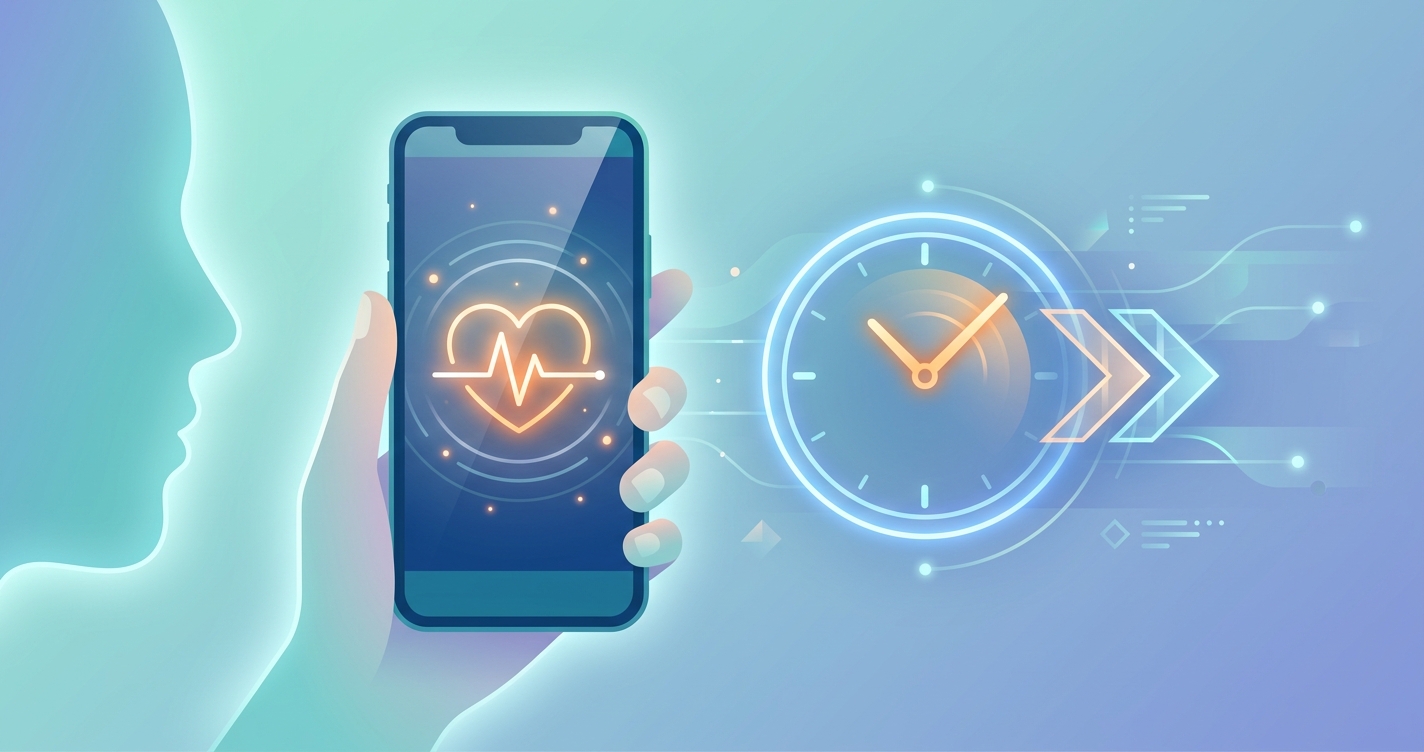
Behind almost every life insurance application sits a quiet fear: that the window to prove good health is closing. An applicant who feels fine today knows that a single diagnosis, an elevated reading, or a new prescription can reclassify them overnight. That anxiety is rational, and it shapes buying behavior more than most carriers acknowledge. The person searching for how to prove they are healthy before it is too late is really asking a question about timing, and the speed of your verification process is the answer they are waiting for. A digital health assessment insurance workflow exists to close that gap between intent and proof, letting an applicant capture verifiable health signals in the moment they decide to act rather than weeks later.
"A record-high 42% of American adults, roughly 102 million people, say they need life insurance or more of it.", LIMRA, 2024 Insurance Barometer Study
Why digital health assessment insurance closes the urgency gap
The structural problem is well documented. LIMRA's 2024 research found that only 51% of consumers report owning life insurance, down from 63% in 2011, while the perceived need has climbed to its highest point in the study's fourteen-year history. Much of that gap is not a demand problem. It is a friction problem. When an applicant decides to buy, the traditional path asks them to schedule a paramedical exam, wait for a nurse, submit to a blood draw, and then wait again for results to reach an underwriter. Every day in that sequence is a day during which the applicant's health, and their motivation, can change.
A digital health assessment shortens the distance between decision and documentation. Instead of routing the applicant to a third-party examiner, the assessment captures physiological signals directly, often through a smartphone camera using remote photoplethysmography, alongside structured health questions and connected data sources. The applicant proves their current state while the intent is still fresh. For carriers, this matters because anti-selection risk and abandonment both rise with delay. An applicant who feels a sense of urgency is, by definition, a motivated buyer, and the process that meets that urgency captures the policy.
The shift is already underway. Gen Re's 2024 U.S. Individual Life Accelerated Underwriting Survey reported that 82% of companies now operate a fully or partially implemented accelerated underwriting workflow, with maximum face amounts in some programs reaching $2.5 million. Digital health data use continues to grow as a share of those decisions.
Comparing how applicants prove health
The differences between verification methods are most visible when you map them against the dimensions an applicant actually experiences.
| Verification method | Time to complete | Time to result | Friction for applicant | Captures current physiology | Anti-selection exposure |
|---|---|---|---|---|---|
| Paramedical exam (blood and fluids) | 30 to 60 min visit | Days to weeks | High (scheduling, in-person) | Yes | Lower |
| Medical records retrieval | Passive | Days to weeks | Low | Historical only | Moderate |
| Health questionnaire only | 10 to 20 min | Instant | Moderate | No | Higher |
| Digital health assessment (self-scan) | Under a minute | Near instant | Low | Yes | Moderate to lower |
No single method is universally superior. The point for product and underwriting teams is that a digital self-scan occupies a useful position: it preserves a measurement of current physiology, which a questionnaire alone cannot, while removing the scheduling drag that drives abandonment in exam-based paths.
Key advantages that map directly to the applicant's urgency:
- Capture happens in the same session as the application, before motivation decays.
- No third-party scheduling means no multi-week dependency on examiner availability.
- Physiological signals are recorded at the moment of application, giving underwriters a timestamped data point.
- Applicants in rural or underserved areas are not gated by examiner coverage.
Limitations underwriting teams should weigh:
- Self-captured data requires liveness and quality controls to prevent gaming.
- Not every product or face amount should bypass fluids; layered triage matters.
- Signal interpretation must be calibrated and monitored against outcomes.
Industry applications
Term life and conversion campaigns
Term products dominate accelerated workflows. Gen Re's 2024 survey found 94% of companies offer a term product through their accelerated path. A digital assessment fits naturally here because term applicants tend to be younger, more digitally comfortable, and more price-sensitive to delay. When a term conversion or cross-sell campaign lands, the applicants most likely to convert are those who can finish proving health in the same sitting.
Final expense and simplified issue
Older applicants buying smaller face amounts are often deterred by the indignity and inconvenience of an exam. A 30-second self-scan provides a proportionate level of verification for the risk, letting carriers extend simplified issue to segments that previously fell into guaranteed issue or went uninsured entirely.
Middle-market expansion
LIMRA identifies middle-income households, those earning $50,000 to $149,999, as the largest underserved opportunity, with 54% indicating intent to buy. This group abandons exam-based flows at high rates. A frictionless digital health assessment is one of the few levers that meaningfully changes their completion behavior without changing price.
Current research and evidence
The evidence base supports a measured optimism. Munich Re's 2024 analysis of U.S. accelerated underwriting trends describes a market that has moved past experimental adoption into operational maturity, with carriers steadily expanding eligibility limits and folding digital health data into their decisioning. Gen Re's data shows that control measures are evolving in parallel: 41% of companies now use post-issue electronic health record checks as a backstop, which signals that carriers are comfortable accepting faster front-end verification when paired with strong audit controls.
The consumer-side research is equally instructive. LIMRA's 2024 Barometer Study found that 72% of Americans overestimate the cost of basic term coverage and 44% admit limited knowledge of how life insurance works. These are people who will not tolerate a long, opaque proof-of-health process. The same study recorded the widest gender ownership gap in its history, with women at 46% ownership versus men at 57%, underscoring how friction disproportionately filters out segments that carriers most want to reach. A verification method that an applicant can complete privately, from a phone, in under a minute, removes one of the larger barriers between expressed need and bound coverage.
What remains an open research question is long-term predictive validity. The physiological signals a digital assessment captures are still being benchmarked against mortality and morbidity outcomes at scale, and responsible carriers treat self-scan data as one input within a triage model rather than a wholesale replacement for all fluid-based testing.
The future of digital health assessment insurance
The direction of travel is toward layered, risk-proportionate verification. Rather than a binary choice between full exam and no exam, carriers are building decision trees where a digital self-scan handles the majority of applicants instantly, and only flagged cases escalate to fluids or records. This preserves underwriting rigor where the dollars justify it while giving the bulk of applicants the speed they expect.
Three developments are likely to define the next several years:
- Tighter integration between self-scan capture and underwriting engines, so a clean assessment can drive an instant decision without manual handoff.
- Expanding face-amount ceilings as outcome data accumulates and regulators grow more comfortable with digital signals.
- Growing regulatory attention to fairness and explainability, which will reward carriers who can document how each signal influences a decision.
The carriers that win the urgency-driven applicant will be those who treat verification speed as a product feature, not a back-office afterthought. When proving health takes 30 seconds instead of three weeks, "before it's too late" stops being a source of anxiety and becomes a moment you can actually capture.
Frequently asked questions
How does a digital health assessment actually verify health in under a minute? Most self-scan tools use the smartphone camera to read physiological signals such as pulse and related cardiovascular indicators through remote photoplethysmography, combined with structured health questions and, where permitted, connected data like prescription history. Together these give underwriters a timestamped picture of current health captured during the application itself.
Is a digital assessment a full replacement for a paramedical exam? Not in every case. Leading carriers use it as the default path for most applicants and reserve fluid-based testing for higher face amounts or flagged cases. Gen Re's 2024 survey shows many carriers pair fast front-end verification with post-issue record checks as a control.
Why does timing matter so much for proving health? Underwriting classifies risk based on current health. A new diagnosis or prescription can change eligibility, so applicants who feel healthy now have a genuine incentive to verify quickly. Faster verification also reduces application abandonment, which LIMRA data ties directly to friction in the process.
Which products benefit most from faster health verification? Term life, final expense, simplified issue, and conversion campaigns see the clearest gains, because these applicants are the most sensitive to delay and the most likely to abandon an exam-based flow.
For product managers and underwriting leaders evaluating how to meet applicants in their moment of urgency, Circadify is building toward this space, replacing the nurse visit with a phone-based self-scan that captures health signals in about 30 seconds. To review product demos and integration guides, visit circadify.com/industries/payers-insurance.