Can a smartphone find health problems my doctor missed during underwriting?
An analysis of how smartphone-based health assessments can identify health risks like unreported hypertension that may be missed during traditional insurance underwriting.
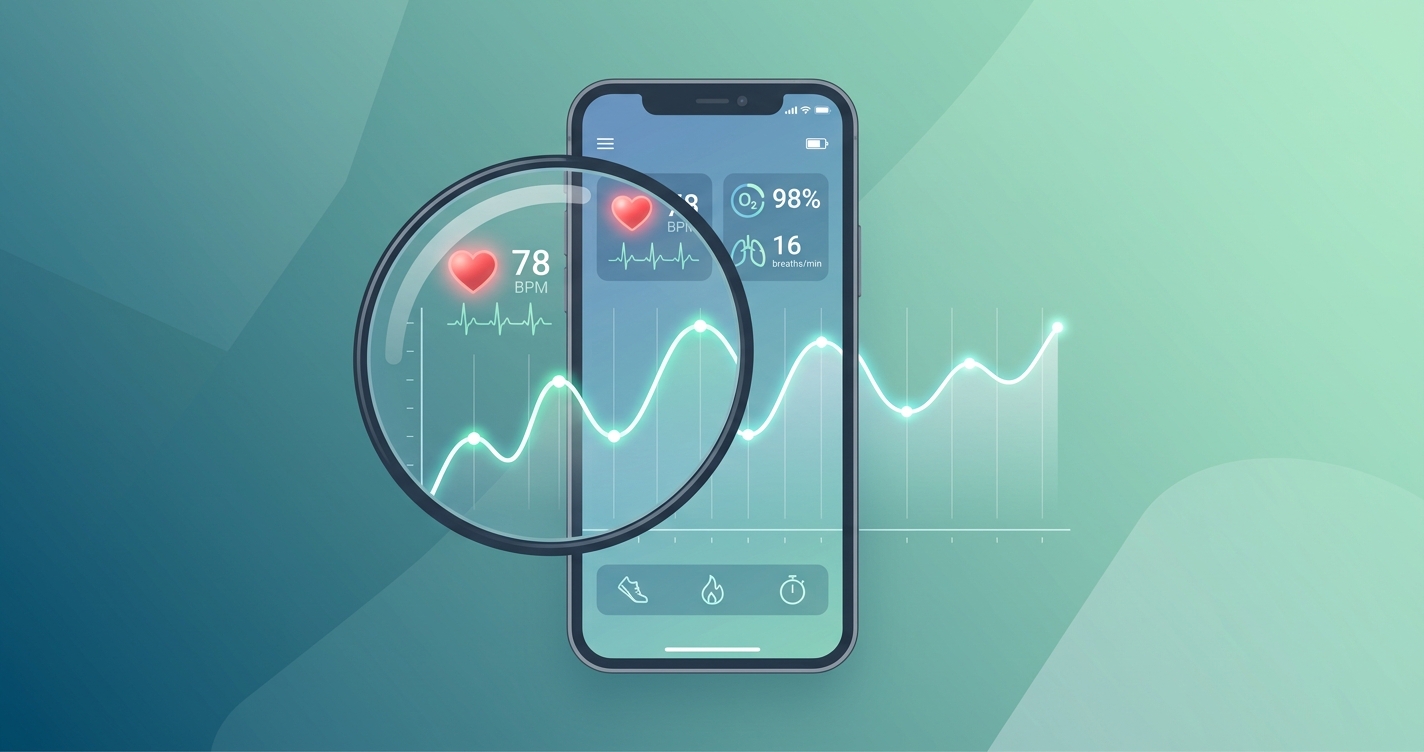
The question of what a smartphone can reveal about your health has moved from a theoretical curiosity to a practical issue, especially in the context of insurance underwriting. Applicants for life and health insurance are increasingly encountering digital options that replace the traditional nurse visit. This leads to a crucial question: can a 30-second scan on your phone find health problems that a doctor, and therefore the applicant, might not even be aware of? The answer is nuanced but leans toward a definitive yes, particularly for chronic, often asymptomatic conditions that are prevalent in the general population but may not be caught in a standard medical history review.
"From August 2021, August 2023, 40.8% of adults with hypertension in the US were unaware of their condition."
- Centers for Disease Control and Prevention (CDC), 2024
How smartphone underwriting can find missed problems
The core value of smartphone-based health screening in an underwriting context is its ability to capture objective, real-time physiological data that an applicant may not know or think to report. Traditional underwriting relies heavily on applicant disclosure and a single point-in-time assessment. A smartphone underwriting scan, by contrast, uses technologies like photoplethysmography (PPG) to analyze light reflected from the skin and detect changes in blood volume. This allows it to find missed problems by measuring vital signs and physiological stress indicators that can point to underlying risks.
For instance, a person might feel perfectly healthy and report no issues on an application. However, a remote scan can derive biomarkers like blood pressure, heart rate, and heart rate variability (HRV). Consistently elevated blood pressure readings or low HRV can be early indicators of cardiovascular risk, hypertension, or high levels of chronic stress, conditions that frequently go undiagnosed during routine check-ups, if those check-ups even occur. The technology doesn't diagnose a disease, but it identifies risk factors that warrant a closer look, providing a more complete and objective picture for risk assessment than memory-based questionnaires alone.
| Feature | Traditional Paramedical Exam | Smartphone-Based Health Assessment |
|---|---|---|
| Methodology | In-person visit, blood draw, urine sample, physical measurements (height, weight, BP) | Remote self-scan using smartphone camera and app |
| Biomarkers | Cholesterol (HDL, LDL), A1c, creatinine, nicotine, blood pressure | Blood pressure, heart rate, heart rate variability (HRV), stress index, respiratory rate |
| Applicant Experience | Requires scheduling, 30-60 minute appointment, potentially invasive | 30-60 second scan, on-demand from applicant's own device, non-invasive |
| Cost & Logistics | High cost per exam, requires network of nurses, subject to geographic limitations | Low cost per assessment, fully digital, accessible to anyone with a smartphone |
| Potential to Find Missed Issues | High for lab-based conditions (e.g., high cholesterol) | High for cardiovascular and stress-related conditions (e.g., undiagnosed hypertension) |
Industry Applications
The ability to uncover previously unknown risk factors has significant implications for the insurance industry. By integrating smartphone-based assessments, carriers can create more accurate risk pools and streamline the underwriting process.
Identifying unreported hypertension
As the CDC statistic highlights, undiagnosed hypertension is a major public health issue. For an insurer, it's also a significant source of unassessed risk. A smartphone scan that measures blood pressure can flag applicants who may have hypertension but are unaware of it. This allows the carrier to make a more informed decision, potentially by requesting further information or adjusting the premium, rather than discovering the condition after a claim is filed.
Flagging early signs of cardiovascular risk
Beyond blood pressure, PPG analysis can reveal more subtle cardiovascular indicators. Heart Rate Variability (HRV), the measure of variation in time between heartbeats, is a powerful indicator of the body's ability to adapt to stress. Low HRV is linked to a higher risk of future cardiovascular events. Researchers have demonstrated that PPG-derived data, when combined with machine learning models, can predict 10-year cardiovascular disease risk with an accuracy comparable to traditional clinical scoring methods (Li, et al., 2022).
Assessing physiological stress
While traditional applications may ask about stress, the answers are subjective. A smartphone scan can provide objective data. By analyzing HRV and other physiological signals, the technology can compute a physiological stress index. This provides a quantifiable measure that can correlate with long-term health risks associated with chronic stress, offering another layer of insight for underwriters.
Current research and evidence
The technology enabling smartphone health screenings is built on a growing body of scientific research. The primary method, known as remote photoplethysmography (rPPG), uses the phone's camera to detect subtle changes in skin color caused by blood flow.
- A systematic review published in npj Digital Medicine confirmed that rPPG can achieve medical-grade accuracy for measuring heart rate and respiratory rate under certain conditions (Villarroel, et al., 2019).
- Studies focused on cardiovascular disease have shown that PPG signals, when analyzed with machine learning algorithms, can detect conditions like atrial fibrillation and assess arterial stiffness, an early sign of atherosclerosis. One study reported accuracy rates as high as 98% for CVD detection using a neural network on PPG data.
- Research published by the American Heart Association demonstrated that a deep learning model using only PPG waveform features could predict 10-year major adverse cardiovascular events (MACE) risk, showing the potential for this technology to serve as a scalable screening tool (Perl, et al., 2021).
While accuracy can be affected by factors like lighting conditions, skin tone, and user movement, ongoing advancements in signal processing and AI are continually improving the robustness and reliability of these measurements.
The future of smartphone underwriting
The trajectory of this technology points toward the detection of an even broader range of biomarkers. In the coming years, we can expect smartphone-based assessments to expand to include:
- Hemoglobin and Bilirubin: Early research is exploring the use of smartphone cameras and multi-spectral imaging to estimate blood composition markers.
- Glucose Trends: While non-invasive glucose monitoring remains a significant challenge, several companies are making progress, which could one day be integrated into a smartphone scan.
- Respiratory Function: Analysis of breathing patterns and sounds could offer insights into conditions like asthma or COPD.
As these capabilities mature, the smartphone will become an even more powerful tool for creating a holistic and dynamic view of an applicant's health, moving underwriting further away from static, one-time events toward continuous and personalized risk assessment.
Frequently asked questions
Is a smartphone health scan as accurate as a doctor's visit? A smartphone scan is not a replacement for a comprehensive examination by a doctor. It is a screening tool designed to identify potential risk factors, not to diagnose medical conditions. Its measurements of vital signs like heart rate and blood pressure have been shown to be highly accurate, but a doctor's visit includes a physical exam, medical history, and clinical judgment that a scan cannot replicate.
What health conditions can a phone camera actually detect risk for? The primary risks a phone camera can help identify are related to cardiovascular health. This includes potential hypertension (high blood pressure), atrial fibrillation (irregular heartbeat), and elevated stress levels. The technology works by measuring blood flow and analyzing the patterns for signs that correlate with these conditions.
Will a smartphone scan that finds a problem automatically increase my insurance premium? Not necessarily. The results of a health scan are one piece of data among many that an underwriter considers. If the scan flags a potential issue, the insurer might request more information, such as a follow-up with your doctor, before making a final decision. In some cases, identifying and addressing a risk factor early could even help you secure coverage by demonstrating proactive health management.
As this technology becomes more integrated into the underwriting process, it offers a faster, less intrusive path to coverage for applicants. For carriers, it provides a more nuanced and data-driven way to assess risk. Companies like Circadify are at the forefront of developing these solutions, helping insurers adopt modern, applicant-friendly technology. To learn more about implementing digital health assessments, explore our resources for payers and insurance partners at circadify.com/industries/payers-insurance.