What happens if I can't sit still long enough for the insurance scan?
Learn how remote health screening for insurance underwriting handles applicant movement from tremors or anxiety, ensuring a fair and accurate assessment.
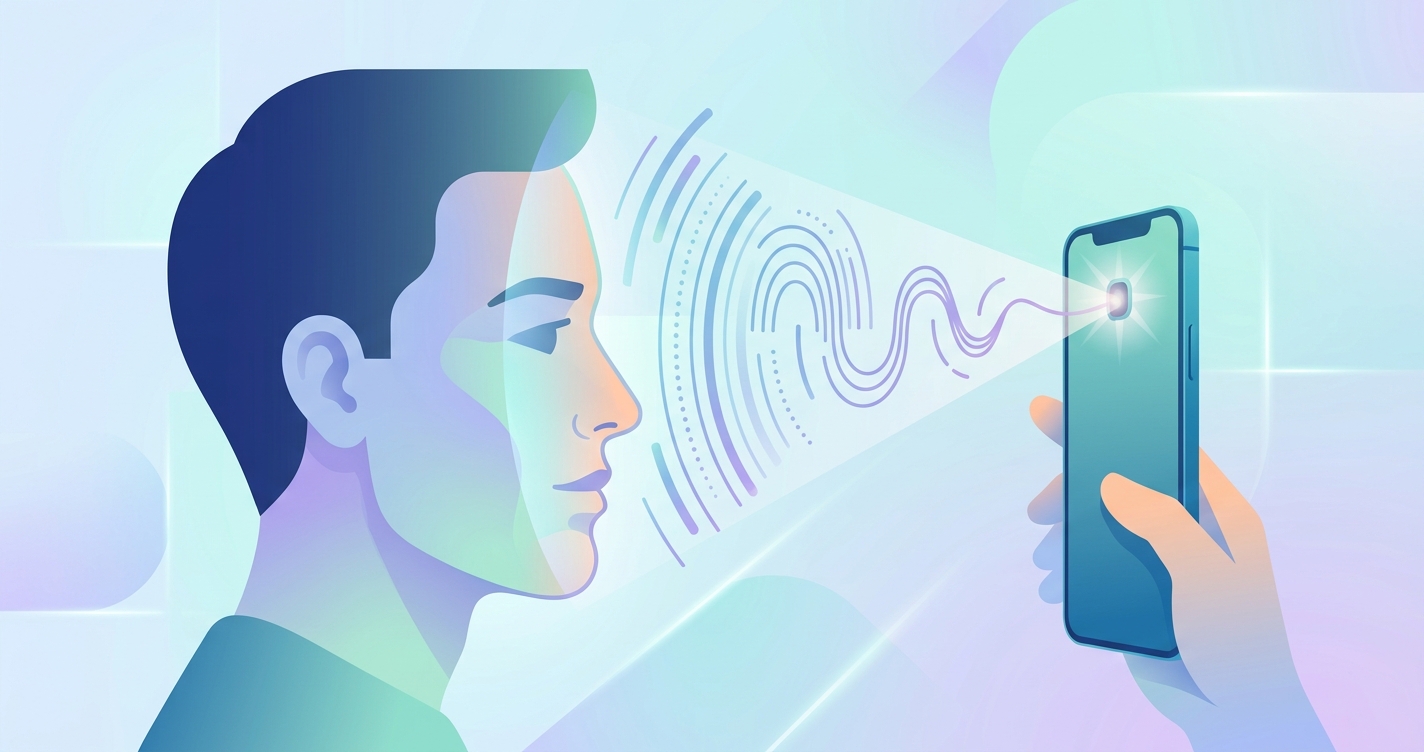
The request to hold still for a 30-second video scan can be a source of significant anxiety for many life insurance applicants. For individuals with anxiety, a natural tremor, or a medical condition like essential tremor, the instruction to "not move" can feel like an impossible task. This raises a critical question for insurance product managers and underwriting executives: what happens if an applicant can't sit still? Does a common and uncontrollable human behavior invalidate the assessment and lead to a failed application? The concern is understandable, but modern remote health screening underwriting technology is specifically designed to account for, and overcome, this exact challenge.
"An estimated 19.1% of U.S. adults experienced an anxiety disorder in the past year, and essential tremor remains the most common movement disorder in adults. These are not edge cases; they are a significant segment of the applicant pool." - National Institute of Mental Health (2017)
How remote health screening underwriting handles movement
At the core of a remote health screening is a technology called photoplethysmography (PPG), which uses light to measure blood volume changes beneath the skin. A smartphone camera can capture these subtle changes on a person's face to calculate vital signs like heart rate. However, this process is sensitive to movement. Any motion, whether from a tremor, shifting posture, or simply nerves, can introduce "noise" into the data. This "motion artifact" is a well-understood challenge in signal processing.
Modern remote health screening underwriting platforms are built with sophisticated algorithms designed to distinguish the valid PPG signal (the "signal") from motion-related distortions (the "noise"). Early academic and commercial systems struggled with this, but the technology has advanced considerably. Researchers like Kaan Akşit (University College London) and his collaborators have published extensive work on methods to suppress motion artifacts in remote PPG signals.
These systems employ a variety of techniques:
- Signal Decomposition: Methods like Independent Component Analysis (ICA) or wavelet transforms are used to break the raw video data into multiple constituent signals. The algorithm then identifies and isolates the component corresponding to the pulsatile blood flow while discarding components associated with erratic movement.
- Region of Interest (ROI) Stabilization: Advanced face-tracking algorithms lock onto the applicant's face and can compensate for minor movements, keeping the measurement area stable even if the person's head sways or shifts slightly.
- Accelerometer Correlation: Some platforms cross-reference the video data with data from the phone's internal accelerometer. This allows the system to identify periods of significant motion and either pause data collection or use the motion data as a reference to subtract the "noise" from the PPG signal.
- Quality Scoring and Retries: The system continuously scores the quality of the incoming signal. If the level of motion artifact is too high to ensure an accurate reading, the platform doesn't simply fail. Instead, it can automatically prompt the applicant to try the scan again, providing guidance on how to improve the result. This built-in retry logic is a crucial element of applicant-centric design.
The goal is not to demand perfect stillness from the applicant but to achieve a high-quality signal despite real-world conditions. A well-designed system can successfully capture vitals from an applicant with a mild tremor or nervous fidgeting without issue.
| Condition | System Response |
|---|---|
| Ideal Conditions | Applicant is still, with good, even lighting and a stable internet connection. |
| Minor Movement (Fidgeting, Swaying) | ROI stabilization and signal decomposition algorithms filter out motion artifacts in real-time. The scan completes successfully, often without the applicant knowing any correction occurred. |
| Significant Movement (Sudden Turn, Phone Drop) | The system detects a high degree of motion via signal quality scoring. Data capture is temporarily paused. The system may automatically restart the capture or prompt the applicant for a retry. |
| Persistent Tremor | Advanced filtering techniques are applied to isolate the underlying cardiovascular signal from the higher-frequency noise of the tremor. The system is designed to handle this common scenario. |
| Low Signal Quality (Poor Lighting) | If the signal is too weak for another reason, the system provides immediate feedback to the applicant (e.g., "Move to a brighter area") and initiates a retry. |
Industry applications and applicant inclusivity
The ability to handle motion is not just a technical feature; it's a business necessity that directly impacts inclusivity and market reach.
Applicants with anxiety
Forcing an already anxious applicant to perform a task that requires perfect stillness can spike their heart rate for reasons entirely unrelated to their baseline cardiovascular health. By building systems that are robust to nervous movement, insurers can get a more representative and fair assessment of the applicant's health.
Applicants with movement disorders
Essential tremor and other movement disorders affect millions of adults. A system that cannot accommodate this reality would effectively discriminate against a large population, limiting the insurer's addressable market and creating potential compliance issues. Motion-resilient technology ensures these applicants can be underwritten through the same efficient, non-invasive process as everyone else.
General Population
Even applicants without a specific diagnosis will move during a scan. They might adjust their posture, get distracted, or simply be unfamiliar with the process. A forgiving system that allows for normal human behavior leads to higher completion rates and a better overall applicant experience.
Current research and evidence
The field of motion artifact correction in PPG is an active area of academic research, ensuring that the capabilities of these systems will continue to improve. A 2022 review published in the journal Sensors titled "Motion Artifact Reduction in Photoplethysmography" surveyed dozens of techniques, from classic adaptive filters to newer deep learning approaches. Studies have shown that combining methods, such as using both wavelet transforms and ICA, can produce a cleaner signal than any single technique alone. The use of deep neural networks to learn the patterns of motion artifacts and subtract them from the signal is a particularly promising area, as noted in research on advancing remote photoplethysmography for naturalistic settings.
The future of remote health screening
Looking ahead, the technology will become even more adept at handling challenging scenarios. We can expect to see the integration of multi-spectral imaging, which uses different wavelengths of light to improve signal quality, and more sophisticated AI models that can process video in real time to an even higher degree of accuracy. The goal is to build a system so robust that the applicant never has to think about whether they are "doing it right." For insurance product managers, this means a future where the remote health screening process is faster, more inclusive, and generates more reliable data for underwriting engines.
The key takeaway for insurers is that the "can't sit still" problem is largely a solved one. Modern remote screening platforms are not brittle, easily-foiled systems. They are robust, resilient, and designed with the realities of human behavior in mind.
Ready to explore how this technology can be integrated into your underwriting workflow? Circadify is at the forefront of developing motion-resilient remote screening solutions that provide a seamless experience for applicants and actionable data for underwriters. To learn more about our technology and how to implement it, visit our Payer and Insurance industry page for product demos and integration guides.