
Why does my no-exam policy still need me to film my face?
No-exam life insurance is faster, but the request to film your face can be confusing. We break down the no-exam life insurance technology that powers instant underwriting.
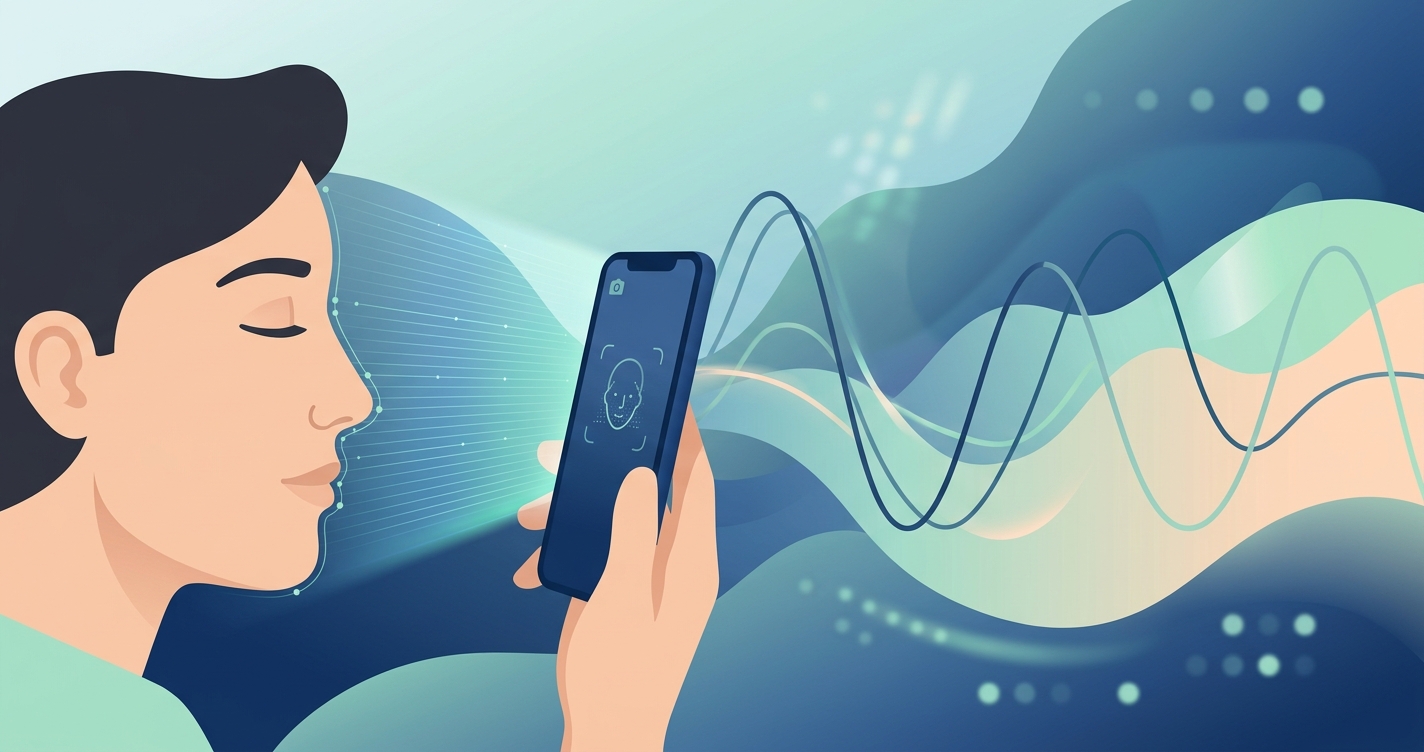
The term "no-exam life insurance" suggests a process free of medical appointments and invasive tests. For the most part, this holds true. The days of scheduling a paramedical examiner to visit your home for blood draws and vital sign checks are increasingly being replaced by streamlined digital processes. Yet, many applicants encounter a step that feels like a medical exam in miniature: a request to record a short video of their face using a smartphone or computer camera. This might seem contradictory, but it represents a critical piece of the no-exam life insurance technology that makes accelerated underwriting possible. The facial scan is a sophisticated, non-invasive method for gathering essential health data that, just a few years ago, would have required an in-person assessment.
"The global no-exam life insurance market was valued at $26.4 billion in 2024 and is projected to reach $52.6 billion by 2033, growing at a CAGR of 8.0% from 2025 to 2033." - Allied Market Research (2024)
The technology behind the facial scan: remote photoplethysmography (rppg)
The video analysis at the heart of many "no-exam" policies is a technology called remote photoplethysmography, or rPPG. It's a contactless method for measuring vital signs, and while it seems futuristic, the underlying science has been in development for over a decade. The foundational work was laid out by researchers like Wim Verkruysse at the University of California, Irvine, whose 2008 paper, "Remote plethysmographic imaging using ambient light," demonstrated that a standard digital camera could capture vital physiological signals from a distance.
So, how does it work? When your heart pumps, it sends waves of blood pulsing through your blood vessels. This flow causes microscopic changes in the color of your skin. These changes are invisible to the naked eye but can be detected by a digital camera. As the camera records a video of your face, sophisticated algorithms analyze the pixel data, paying close attention to the green channel of the RGB (Red, Green, Blue) spectrum, which is particularly sensitive to hemoglobin absorption in the blood. By tracking these subtle, cyclical changes in skin color, the no-exam life insurance technology can calculate key vital signs.
The primary measurements include:
- Heart Rate: The number of times your heart beats per minute.
- Heart Rate Variability (HRV): The variation in time between each heartbeat, a key indicator of cardiovascular health and stress levels.
- Respiration Rate: The number of breaths you take per minute.
- Blood Pressure: In some more advanced systems, rPPG can estimate systolic and diastolic blood pressure by analyzing the pulse wave transit time and other features of the signal.
This technology allows insurers to gather objective physiological data without the cost, time, and applicant inconvenience associated with a paramedical exam. It provides a data-driven checkpoint to supplement the applicant's self-reported health information.
Traditional vs. technology-driven health assessment
To understand the value of rPPG in this context, it's helpful to compare the old and new methods of gathering applicant health data.
| Feature | Traditional Paramedical Exam | Remote Facial Scan (rPPG) |
|---|---|---|
| Method | In-person visit by a nurse or phlebotomist | 30-60 second video from applicant's device |
| Data Collected | Blood sample, urine sample, height, weight, blood pressure, pulse | Heart rate, HRV, respiration rate, sometimes blood pressure |
| Applicant Effort | Scheduling an appointment, abstaining from food/drink, the visit itself | Opening a link and following on-screen instructions |
| Time to Results | 3-10 business days for lab results | 1-2 minutes for data processing |
| Cost to Insurer | High (personnel, travel, lab fees) | Low (software license, processing cost) |
| Objectivity | High (lab-based analysis) | High (algorithm-based analysis of physiological data) |
Industry applications of facial scanning technology
For insurance product managers and underwriting executives, the adoption of no-exam life insurance technology like rPPG is not just about replacing an old process. It's about fundamentally rethinking the customer journey and risk assessment model.
Accelerated Underwriting
The most immediate application is in accelerated underwriting programs. By providing instant, objective health data, rPPG allows carriers to triage applicants more effectively. Low-risk individuals can be approved in minutes or hours, rather than weeks. This speed is a significant competitive advantage, reducing the likelihood of an applicant abandoning the process.
Enhanced risk stratification
While not as comprehensive as a full blood panel, the data from a facial scan provides valuable clues about an applicant's current health status. An elevated resting heart rate, low heart rate variability, or a high respiration rate can all be indicators of underlying health risks that may not have been disclosed on an application. This allows underwriters to flag cases for further review while fast-tracking others.
Expanding access and improving UX
The logistical challenges of scheduling a paramedical exam can be a major barrier for applicants, particularly those in rural or remote areas. A mobile-first, self-service process removes this friction. This improves the applicant experience, increases completion rates, and makes it feasible to offer coverage to a wider population. The entire process of applying for life insurance can be completed from a smartphone, a concept that was pure science fiction just a decade ago.
Current research and evidence
The accuracy of rPPG technology is a primary concern for insurers. Decades of actuarial science are built on data from traditional exams, and any new method must prove its reliability. Research has shown that under controlled conditions, rPPG can be highly accurate. Studies have reported mean absolute errors for heart rate as low as 0.1 beats per minute when compared to ECGs.
However, the real world is not a laboratory. Several factors can influence the accuracy of a reading:
- Movement: Head and body motion can disrupt the signal and are a primary focus of ongoing research.
- Lighting: Poor or fluctuating light conditions can make it harder for the camera to detect the subtle color changes. Modern algorithms are increasingly robust in handling these variations.
- Skin Tone: Early rPPG models struggled with different skin pigmentations, but significant progress has been made in ensuring accuracy across a diverse population.
- High Heart Rates: Some studies note a drop in accuracy at elevated heart rates, an area of active development for telemedical and fitness applications.
Researchers are continually refining the algorithms, often using hybrid neural network models to better filter out noise and improve the signal's reliability. The goal is to create a system that is Accurate. Resilient to the variability of an uncontrolled home environment. One 2022 study published in the journal Sensors confirmed the feasibility of using smartphone cameras for estimating blood pressure, finding a high correlation with traditional cuff-based measurements in normotensive participants.
The future of no-exam life insurance technology
The video scan is just the beginning. The technology roadmap for remote health assessment is rapidly evolving. The integration of artificial intelligence and machine learning will allow these systems to detect more than just basic vital signs. Future iterations may be able to analyze facial morphology for signs of certain health conditions, track eye movements, or even analyze voice patterns for clues about cognitive health.
As the technology matures, it will move from being a tool for triaging low-risk applicants to a core component of underwriting for more complex and higher-value policies. The data gathered will feed directly into increasingly sophisticated underwriting engines, enabling a new level of automated, data-driven risk assessment that is faster, fairer, and more efficient than ever before.
For insurance carriers, the question is no longer if they should adopt this technology, but how they can integrate it most effectively into their underwriting and product strategy.
Frequently asked questions
1. Is the facial scan recording saved?
- In most compliant systems, the video itself is not permanently stored. The algorithms process the video in real-time to extract the physiological data, and then the video file is typically discarded. The raw numerical data (e.g., heart rate, HRV) is what's passed to the insurance carrier for underwriting.
2. What if I have a medical condition that affects my heart rate?
- The rPPG measurement is just one data point among many that an insurer uses. Underwriting engines consider the scan data in the context of your application, medical history, and other third-party data sources. An unusual reading will not typically lead to an automatic denial but may trigger a request for more information or a manual review by a human underwriter.
3. Can I "fail" the facial scan?
- You can't "fail" the scan in the traditional sense. It is not a pass/fail test. The purpose is to gather data. If the system is unable to get a clean reading due to poor lighting or excessive movement, it will typically guide the applicant to try again. The data collected is simply an objective measurement used to help the insurer make a fair assessment of risk.
The evolution of no-exam life insurance technology is a direct response to consumer demand for faster, less invasive application processes. Circadify is at the forefront of this shift, developing the core technologies that enable insurers to replace outdated, high-friction assessment methods with seamless, data-driven digital experiences. To learn more about integrating remote health assessment into your underwriting workflow, explore our resources for insurance carriers at circadify.com/industries/payers-insurance.